
Which of the Following Is Not a Category of Electrical Burns? Types Explained
Table of Contents
Electrical burns are not all the same injury — doctors and safety guides sort them into categories by how the electrical energy reached the body. Exam and safety questions often ask which option does not belong in that list, and the trap answers are usually other kinds of burns. This guide explains the recognized categories and the answer.
Quick Info
| Answer | Radiation burn is NOT a category of electrical burns — it comes from electromagnetic radiation (such as UV rays), not from electric current |
| The 4 categories | Contact (true electrical) burns, arc burns, flash burns, flame burns |
| Also sometimes listed | Lightning injuries and oral burns (especially in children) appear in some classifications |
The Short Answer
Radiation burn is not a category of electrical burns. Radiation burns arise from electromagnetic radiation, such as UV rays, rather than from electric current or an electrical arc. Chemical burns and scald burns are likewise not electrical burn categories — they have different causes, even though all of them are burns. The four generally recognized categories of electrical burns are contact, arc, flash, and flame burns.
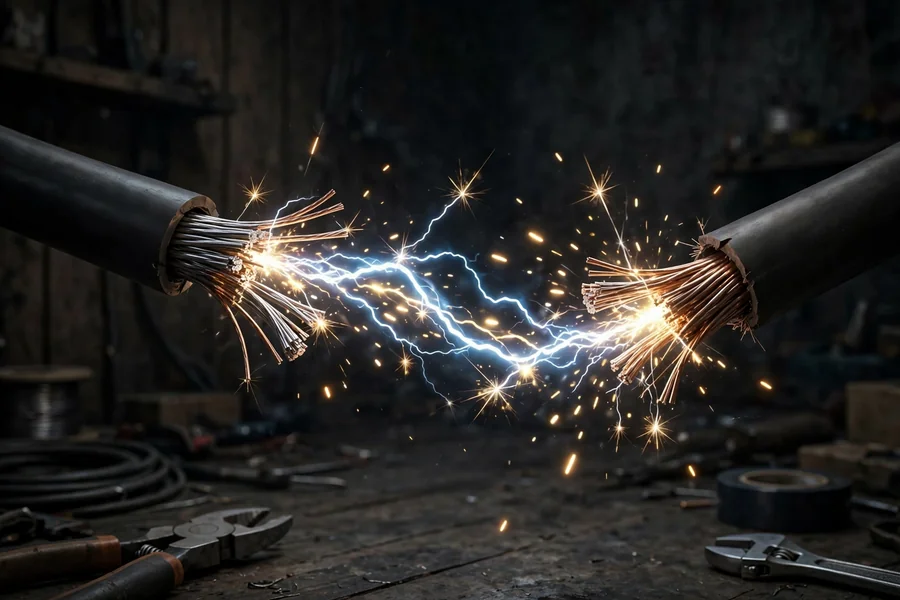
The Four Categories of Electrical Burns
1. Contact burns (true electrical burns). These result from direct contact with an energized source: current enters the body at one point and exits at another, generating heat that damages skin, muscles, nerves, and organs along its path. External wounds may look minor while the internal damage is extensive, and entry and exit wounds are typical.
2. Arc burns. These occur when electrical energy travels through the air as an arc, producing intense heat — reportedly 2,000–4,000°C — without direct contact with the source. The arc can also create a blast of pressure.
3. Flash burns. Flash burns are caused by an arc flash or explosion: the intense heat and light burn exposed skin, often with a filigree or fern-like (“Lichtenberg”) pattern, and are usually superficial. They are closely related to arc burns but are listed separately in most classifications.
4. Flame burns. These happen when an electrical arc or short ignites nearby materials — most often the victim’s clothing — and the resulting fire causes thermal burns. The electricity itself may never pass through the body.
Some classifications add a fifth group: lightning injuries, a unique type of injury from extremely high voltage delivered for a very short time, with most of the current flowing over the body. Oral burns from biting electrical cords are also listed as a separate type in some guides, especially for children. Electrical burns are further split by voltage into low-voltage (under 1,000 V) and high-voltage injuries.
What Is NOT a Category of Electrical Burns
If a multiple-choice question lists contact, arc, flash, and flame burns alongside one of the options below, the odd one out is:
- Radiation burn — caused by UV or other electromagnetic radiation (for example sunburn), not by electricity.
- Chemical burn — caused by acids, alkalis, or other chemicals; a separate classification entirely.
- Scald burn — caused by hot liquids or steam; a thermal burn, not an electrical one.
- Friction burn — caused by skin rubbing against a surface; not an electrical injury.
The key test is the mechanism: electrical burn categories all involve electric current, an arc, or a fire started by electricity. If the heat came from radiation, chemicals, or hot water, it is a different kind of burn.
What To Do After an Electrical Burn
Never touch a person who is still in contact with a live electrical source — switch off the power first or move the source away with a non-conductive object. Call emergency services immediately, because electrical burns can cause hidden internal damage and heart rhythm problems even when the skin injury looks small. Cool the burn with clean, cool running water, cover it loosely with a sterile dressing, and do not apply creams or ice. Anyone with an electrical burn should be checked by a doctor, even for a small wound.
Frequently Asked Questions
Which of the following is not a category of electrical burns?
Radiation burn. The recognized categories are contact (true electrical), arc, flash, and flame burns; radiation burns come from electromagnetic radiation, not electricity.
How many types of electrical burns are there?
Most medical classifications list four main types — contact, arc, flash, and flame — with lightning injuries sometimes added as a fifth.
What is the most dangerous type of electrical burn?
Contact (true electrical) burns are often the most severe, because current passing through the body can damage deep tissue, nerves, and organs while leaving only small marks on the skin.
Are lightning burns electrical burns?
Lightning injuries are usually classified separately from the four main electrical burn categories, because the current is delivered at extremely high voltage for a fraction of a second and mostly travels over the body.
Read more: Mods LyncConf: What Is LyncConf Game Mods? Guide, Safety & How It Works | Which of the Following Is Not a Category of Electrical Burns?