
Ethnicity Guesser AI: How AI Predicts Ethnicity from Photos
Table of Contents
- Quick Facts About Ethnicity Guesser AI
- What Is an Ethnicity Guesser AI?
- How Does Ethnicity Guesser AI Work?
- Popular Types of Ethnicity Guesser AI Tools
- How Accurate Are AI Ethnicity Guessers?
- Privacy and Ethical Concerns
- Frequently Asked Questions
- Conclusion
Quick Facts About Ethnicity Guesser AI
| Attribute | Details |
|---|---|
| What it is | Software that uses machine learning to estimate a person’s ethnicity from a photo or video |
| Core technology | Deep learning — particularly convolutional neural networks (CNNs) |
| Input | A facial photo or live snapshot |
| Output | Ethnicity estimates, usually as percentage breakdowns |
| Typical use | Entertainment, social media, genealogy curiosity, marketing research |
| Key limitation | Facial features alone cannot determine ethnicity definitively |
| Related concept | Facial recognition and face analysis technology |
What Is an Ethnicity Guesser AI?
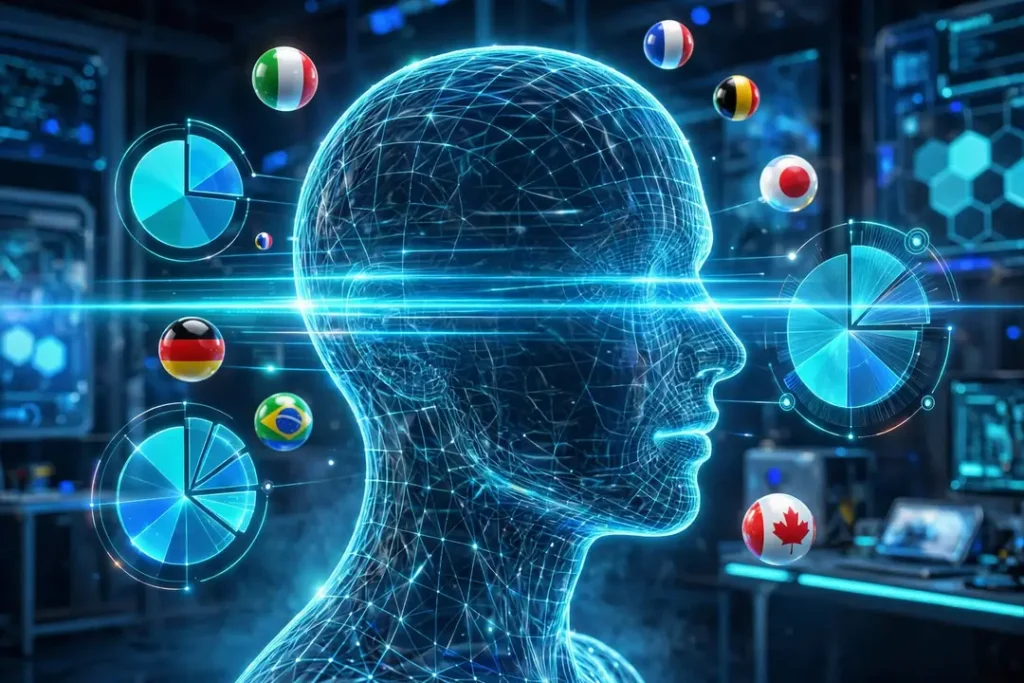
An ethnicity guesser AI is a software program that uses machine learning algorithms to analyze a photograph or video and estimate the person’s ethnic background. It compares facial features against vast datasets of labeled faces from various ethnic groups, then generates a guess — typically as a set of probabilities, such as “40% East Asian, 30% European, 30% Native American.”
These tools have become popular on social media and in entertainment apps, where users upload selfies out of curiosity about their heritage or appearance. They are powered by the same underlying face-analysis technology used in facial recognition systems, but instead of identifying who someone is, they attempt to classify what ethnic group someone appears to belong to.
It is important to understand from the start: an ethnicity guesser AI produces an estimate, not a determination. Ethnicity is a complex social and cultural identity — Wikipedia’s ethnicity article defines it through shared language, culture, ancestry, traditions, and history — and it cannot be definitively read from a face. Try our own curiosity-driven guide at Ethnicity Guesser or the interactive What Ethnicity page for more.
How Does Ethnicity Guesser AI Work?
At its core, an ethnicity guesser AI follows a pipeline of image processing, feature extraction, and classification:
1. Image Acquisition and Preprocessing
The user uploads a photo or takes a live snapshot. The app enhances the image quality, removes background noise, detects the face, and aligns it for analysis — standard preprocessing in computer vision.
2. Facial Feature Extraction
The AI detects key facial landmarks: the eyes (shape and color), nose (width and length), cheekbones, jawline structure, lips, and skin tone. Using computer vision techniques, it builds a structural map of the face — the unique contours and proportions that can correlate with ethnic background. Modern systems use convolutional neural networks (CNNs) to recognize subtle differences in facial structure and skin tone automatically.
3. Model Comparison
The extracted features are compared against a pretrained model built from large datasets of faces labeled by ethnic group. The model has learned to associate specific facial shapes, colors, and feature combinations with particular ethnicities.
4. Probability Estimation
Rather than giving an absolute answer, the app outputs probabilities — the likelihood that the person belongs to each ethnic group in its training set. This percentage-based output reflects the blended, complex nature of human ancestry.
Popular Types of Ethnicity Guesser AI Tools
Ethnicity guesser AI appears in several forms:
Mobile face-analysis apps
Smartphone apps that let users upload a selfie and receive an instant ethnicity estimate. These are the most common and are designed mainly for entertainment.
Web-based analyzers
Browser tools that run the same analysis without an app download. Some are offered alongside genealogy or DNA-test companion services.
Social media filters and features
Platforms have experimented with face-analysis features for content personalization and advertising, using ethnicity estimates for demographic targeting.
Research and security tools
Academics use similar technology to study population patterns, while some security and law enforcement applications have drawn controversy over profiling concerns.
How Accurate Are AI Ethnicity Guessers?
The honest answer: not very, and they come with significant limitations.
Mixed heritage confounds them
Ethnicity guesser AIs are trained on labeled datasets, and people of mixed heritage — a growing share of the world’s population — often fall between the model’s categories, producing misleading or simplistic results.
Training data bias
The accuracy of predictions depends heavily on the diversity and quality of the training images. Underrepresented groups and populations outside the training data get skewed or incorrect predictions. This bias is one of the most widely documented problems with the technology.
Photo quality matters
Lighting, angle, makeup, facial expression, and image resolution all affect results. The same person can get different ethnicity estimates from different photos.
Appearance is not identity
The fundamental limitation: ethnicity is not purely physical. Two people who look similar can belong to different ethnic groups, and people within one ethnic group can look very different. A face-based estimate can never capture culture, language, family history, or self-identity — the things that actually define ethnicity.
Privacy and Ethical Concerns
Ethnicity guesser AIs raise serious questions worth knowing about before uploading your face:
Biometric data collection
Your facial data is biometric data. Many apps store, analyze, or share uploaded photos under terms of service few users read. Once a face is in a database, it can be difficult to remove.
Profiling and discrimination
Technology that labels people by ethnicity can be misused for profiling, discriminatory targeting, or surveillance — especially in security or law enforcement contexts. Several civil rights organizations have warned against deploying ethnicity estimation in policing.
Reinforcing stereotypes
Reducing a person’s identity to facial measurements risks reinforcing racial stereotypes and pseudoscientific ideas about “looking” a certain ethnicity. Ethnicity researchers emphasize that appearance-based classification is a poor proxy for cultural identity.
Consent and entertainment use
Running someone else’s photo through an ethnicity guesser without their consent is a privacy violation. Treat these tools as entertainment with your own images only, and check each app’s privacy policy before uploading.
For a broader understanding of the concepts involved, read Wikipedia’s page on ethnic groups.

Frequently Asked Questions
What is the best ethnicity guesser AI app?
Several mobile apps offer face-based ethnicity estimates, but “best” is hard to define — none are reliably accurate. Look for apps with clear privacy policies that do not retain your photos, and treat results as entertainment rather than fact.
Can AI really tell what ethnicity I am?
No. AI can estimate which ethnic groups your facial features statistically resemble, based on its training data. It cannot determine your actual ethnicity, heritage, or identity.
Is it safe to upload my photo to an ethnicity guesser?
Be cautious. Your face is biometric data. Read the app’s privacy policy, check whether photos are stored or shared, and prefer tools that process images locally or delete them after analysis.
How is an ethnicity guesser different from a DNA test?
A DNA test analyzes your actual genetic material and traces ancestry through genetic markers — far more scientific and personal. An ethnicity guesser only analyzes your appearance against statistical patterns in its dataset.
Can ethnicity guesser AI be used for genealogy?
It can be a fun starting point for curiosity about heritage, but it is not a reliable genealogy tool. For real ancestry research, DNA testing and family records are the appropriate methods.
Conclusion
Ethnicity guesser AI tools use deep learning and facial feature analysis to estimate ethnic background from a photo, producing percentage-based guesses as entertainment or demographic insight. The technology works through image preprocessing, landmark extraction, and comparison against trained datasets — but it is limited by training bias, photo quality, and the fundamental fact that appearance alone cannot define ethnicity. If you try one, treat the results as a curiosity rather than a conclusion, protect your biometric data, and remember that true heritage lives in culture, family history, and identity — not just a face.