Ethnicity Guesser: How AI Photo-Based Ethnicity Guessers Work
Ethnicity Guesser: How AI Photo-Based Ethnicity Guessers Work
An ethnicity guesser is an AI-powered tool that estimates a person’s ethnicity from a photo, a name, or a text description. These tools have become popular online as curiosities: upload a selfie, and within seconds the tool returns a breakdown such as 40% East Asian, 30% European, 20% South Asian. But what is actually happening behind that screen, and how seriously should you take the answer? This guide explains how photo-based ethnicity guessers work, what they can and cannot do, and how they compare to DNA ancestry tests.
Table of Contents
- Key Facts About Ethnicity Guessers
- What Is an Ethnicity Guesser?
- How Does an AI Ethnicity Guesser Work?
- Types of Ethnicity Guessers
- How Accurate Are Ethnicity Guessers?
- Ethnicity Guesser vs DNA Test
- Privacy and Safety Tips
- Frequently Asked Questions
- Conclusion
Key Facts About Ethnicity Guessers
| Attribute | Details |
|---|---|
| Tool Type | AI facial and name analysis |
| Input Methods | Photo, name, or text description |
| Output | Estimated ethnic groups with probabilities |
| Accuracy | Rough visual estimate only |
| DNA Equivalent | No — DNA tests use genetic data |
| Cost | Many free online tools |
What Is an Ethnicity Guesser?
An ethnicity guesser is a software tool that attempts to estimate someone’s ethnic background using artificial intelligence. The most common type analyzes a photograph of a face and returns a list of ethnic or regional groups with percentage-style probabilities. Others work from a person’s name, looking for linguistic and cultural patterns, or from a text description of physical features.
The important word is “guesser”. These tools do not measure your ancestry, your genetics, or your cultural identity. They analyze visual or textual patterns and compare them against learned examples of faces and names associated with different ethnic groups. The result is a statistical estimate — a guess — and not a verified fact about who you are. If you’re curious about how these tools detect ethnicity from a photo specifically, this photo-based ethnicity guesser overview shows what a typical tool asks for and returns.
Ethnicity guessers sit alongside a wave of consumer AI tools that analyze images in seconds. As we’ve seen in how AI is changing video editing, the same computer-vision advances behind creative tools are also powering these novelty analyzers — fast, impressive-looking, but only as good as the data they were trained on.
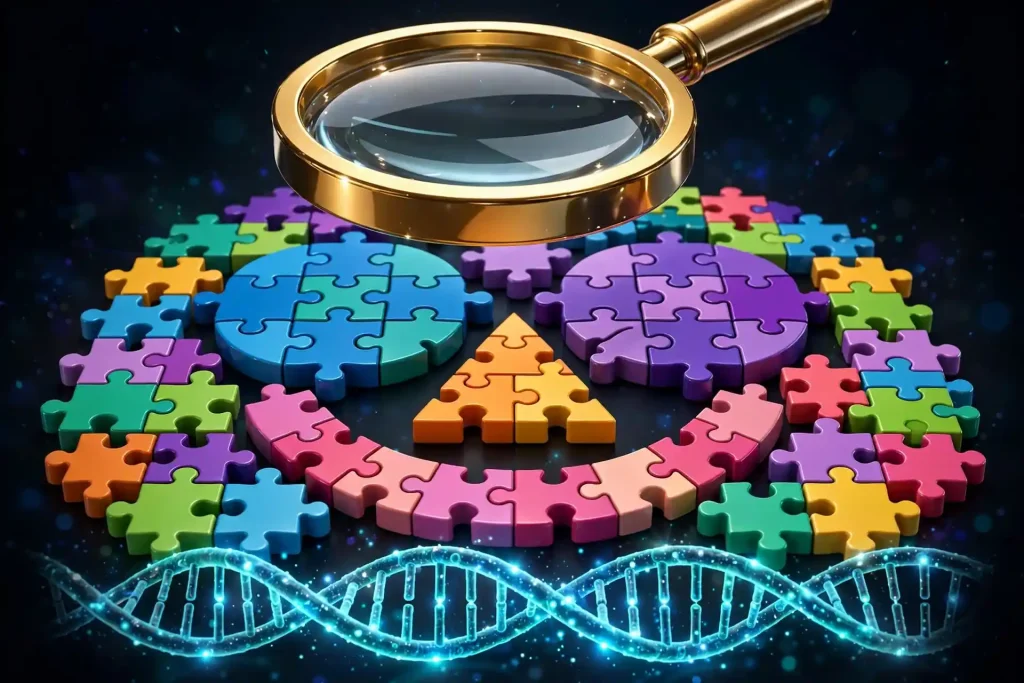
How Does an AI Ethnicity Guesser Work?
Photo-based ethnicity guessers generally follow a three-step process:
- Facial feature extraction. Computer vision first locates the face and detects landmarks — the eyes, nose, cheekbones, jawline, and overall face shape — building a structural map of the features. The quality of this step depends heavily on the photo: a clear, front-facing selfie with even lighting gives the model the most to work with.
- Machine learning comparison. The model compares the extracted features against a large database of labeled faces from various ethnic groups. This is where training data matters most: the diversity and balance of the training set drive how well the tool performs. A model trained mostly on one region’s faces will be weaker at classifying faces from underrepresented groups.
- Probability estimation. The final output is not a single verdict but a set of probabilities — for example, 40% East Asian, 30% European, 20% South Asian, 10% other. These percentages describe how the model’s patterns matched, not how much of each ancestry you actually have.
Name-based guessers work differently: they analyze the linguistic origin of a name — its structure, suffixes, and cultural usage patterns — and suggest the ethnic groups or regions where that name is most common. Text-description tools ask you to describe features in words and apply similar pattern matching. Uploading the same photo twice, or with a different angle or filter, can produce noticeably different results, because the model is reacting to pixel-level input rather than to your identity.
Types of Ethnicity Guessers
Ethnicity guessers come in several forms, each with its own input and logic:
- Photo-based tools. The most popular category. Upload a selfie (or sometimes use your phone’s camera) and the AI returns an estimated ethnic breakdown. These rely on facial recognition and machine-learning classification.
- Name-based tools. You enter a full name, and the tool analyzes its linguistic and cultural origins — useful for guessing the background a name most likely comes from, though names frequently travel across cultures through migration and marriage.
- Text-description tools. You describe features in your own words (for example, eye shape, hair texture, skin tone) and the tool matches the description to ethnic profiles. This is the least precise method, since it depends on subjective self-description.
- Chatbot-style guessers. General-purpose AI assistants like ChatGPT are sometimes used for this purpose. EthnicityTest’s guide on ChatGPT as an ethnicity guesser explains the difference between an AI chatting about ethnicity and a validated identification tool. These assistants may discuss an image, but their visual guesses are not validated identification — a fluent-sounding answer is not evidence.
The photo and video AI space is evolving fast; roundups like the best free AI tools of 2026 show how quickly consumer AI apps multiply — and how many of them process your face, name, or likeness in the process.

How Accurate Are Ethnicity Guessers?
Ethnicity guessers offer only a rough visual estimate, and there are several hard limits on what a face-based guess can say:
- A face cannot prove ethnicity. Ethnicity is cultural — shared heritage, language, and tradition — while a photo captures only appearance. Many people look different from the ethnic group they belong to, and many ethnic groups share similar physical features.
- Nationality cannot be inferred from a face. A photo says nothing about which passport someone holds. Nationality is a legal status, not a visual trait — as our guide to nationality checking covers, nationality is established through documents, never through looks.
- Results vary between uploads. Lighting, angle, filters, sunglasses, facial hair, and image blur all shift the feature extraction, so the same person can get different percentages from different photos.
- Training bias matters. Accuracy depends on how diverse the training database is. Underrepresented groups in the training data tend to get the least reliable results.
- A confident answer is not evidence. An AI that states a result fluently and precisely is still describing pattern matches, not facts about your ancestry.
For the best possible input, use a clear, front-facing selfie with even lighting and no filters or sunglasses. Even then, treat the output as entertainment or a starting point for curiosity — not as a determination of your identity.
Ethnicity Guesser vs DNA Test
DNA ancestry tests and ethnicity guessers answer different questions with different kinds of data:
- Data source: A DNA test analyzes your actual genetic material — comparing your DNA to reference populations of known origin. An ethnicity guesser analyzes a photograph, name, or description — no biological data involved.
- What it measures: DNA tests estimate inherited ancestry: the populations your ancestors likely came from based on genetic markers. A guesser estimates which ethnic group your appearance most resembles according to its training data.
- Reliability: DNA tests are far more grounded, though still dependent on the size and quality of their reference populations and on how results are categorized. Guesser results are rough visual estimates that can change from photo to photo.
- Cost and effort: Guesser tools are typically free and instant. DNA tests require a saliva or cheek-swab sample, weeks of processing, and a fee.
If your goal is to learn about your inherited ancestry — where your ancestors likely came from — a DNA test is the far more relevant option. An ethnicity guesser is better suited to casual curiosity about how an AI reads a photo.
Privacy and Safety Tips
Uploading your face to an online tool has real privacy implications. Before you use any ethnicity guesser:
- Treat your photo as personal data. A face image is biometric information. Check the tool’s policy on retention — how long it stores your photo, whether it can be deleted, and whether images are used to train future models.
- Don’t upload photos of children or other people. Only upload your own photos, and only with full understanding of where they go. Uploading someone else’s face without consent raises both ethical and, in some jurisdictions, legal concerns.
- Be cautious with free tools. Free photo-analysis sites may monetize your uploads through advertising, data sharing, or model training. Read the terms before clicking upload.
- Never use results as identity proof. Guesser output should never be used to challenge someone’s identity, support discrimination, or make official claims about ethnicity or nationality.
Frequently Asked Questions
What is an ethnicity guesser?
An ethnicity guesser is an AI tool that estimates a person’s ethnicity from a photo, a name, or a text description. Photo tools detect facial landmarks, compare them to a database of labeled faces using machine learning, and return probable ethnic groups with percentage-style probabilities.
Are AI ethnicity guessers accurate?
Only roughly. They provide visual estimates based on pattern matching, not verified ancestry. Results change with lighting, angle, and filters, and accuracy depends heavily on how diverse the tool’s training data is. Treat them as curiosity tools, not as determinations of identity.
Can an ethnicity guesser replace a DNA test?
No. DNA tests use genetic data to estimate inherited ancestry, which is far more relevant for understanding your background. A photo-based guesser only analyzes appearance. The two tools answer different questions with different kinds of data.
Do ethnicity guessers store my photos?
It depends on the tool. Some delete uploads quickly; others retain them for model training or analytics. Always check the retention and deletion policy before uploading, and treat any face photo as sensitive personal data.
Why do I get different results from different photos?
The AI reacts to pixel-level input: lighting, angle, expression, filters, sunglasses, and blur all change the extracted features. Different photos of the same person can produce noticeably different ethnic breakdowns.
Can an AI guesser tell my nationality from my face?
No. Nationality is a legal status — citizenship of a country — and it cannot be inferred from appearance. Tools or people that claim otherwise are misleading you.
Conclusion
An ethnicity guesser is a fun, fast demonstration of computer vision: it extracts facial features from a photo, compares them against learned patterns, and returns a probability-based estimate of ethnic groups. But those percentages describe how your photo matched a training database — not your ancestry, your culture, or your identity. A face-based guess cannot prove ethnicity, cannot reveal nationality, and is no substitute for a DNA ancestry test. If you try one, use your own clear photo, check the privacy policy first, and enjoy the curiosity without taking the numbers as fact.