
The Benefits of Automation in Modern Manufacturing
Quick Answer: Automation in modern manufacturing brings consistency, quality, and safety to production — but only when processes are stable, equipment is maintained, and employees are trained. The biggest gains come from solving specific problems, not from automating for its own sake.
Table of Contents
- Why Is Automation Important in Modern Manufacturing?
- How Can Automation Improve Production Efficiency?
- What Are the Quality Benefits of Automated Processes?
- How Does Automation Support Packaging Quality Control?
- Can Automation Improve Workplace Safety?
- How Do Data and Predictive Maintenance Reduce Downtime?
- What Challenges Should Manufacturers Consider Before Automating?
- How Can Automation Support Long-Term Manufacturing Improvement?
Automation has become an important part of modern manufacturing, helping businesses maintain consistent production while responding to changing customer requirements. Automated equipment can perform repetitive tasks, monitor operating conditions and collect information about production performance. When implemented appropriately, these capabilities can improve efficiency and product quality.
However, automation involves more than replacing manual work with machines. Successful implementation requires stable processes, suitable equipment and employees who understand how automated systems operate. Manufacturers also need to consider maintenance, safety and how new technology will interact with existing production lines.
Why Is Automation Important in Modern Manufacturing?
Manufacturers must balance product quality, operating costs and changing delivery requirements. Fluctuations in demand and material availability can make these objectives difficult to achieve. Automation helps businesses manage some of this complexity by making suitable production activities more consistent.
Automated systems can control machinery, transfer materials and perform measurements according to predefined instructions. They are particularly useful for repetitive tasks where small variations can affect finished products. Their reliability still depends on correct configuration, maintenance and process design. Automation cannot compensate for poorly defined product requirements.
Modern systems can also make production information more accessible. Sensors record operating conditions while equipment is running, allowing teams to investigate unexpected changes. These records provide a stronger basis for improvement than relying solely on occasional manual observations.
How Can Automation Improve Production Efficiency?
Automated handling systems can move components between production stages without constant manual intervention. This may reduce unnecessary interruptions and allow employees to focus on work requiring technical judgement. The benefit is especially relevant where repetitive handling limits production capacity.
Greater machine speed does not always mean greater efficiency. If faster equipment produces more defects or creates bottlenecks elsewhere, overall performance may deteriorate. Manufacturers should therefore assess how automation affects the complete production line rather than an individual operation.
Connected equipment can also coordinate activities between production stages. Information about machine status and output allows downstream processes to respond to changing conditions. Better coordination may reduce waiting time, unnecessary material movement and avoidable interruptions. These improvements depend on understanding existing process constraints before introducing new technology.
What Are the Quality Benefits of Automated Processes?
Product quality depends on keeping critical operating conditions within established limits. Automated controls can regulate temperature, pressure, filling volume and processing time. Maintaining stable parameters helps reduce variation between production runs.
Inspection systems offer another advantage. Machine vision, sensors and automated measuring equipment can identify certain defects more consistently than occasional manual checks. For example, a vision system may detect dimensional differences or missing components when properly configured.
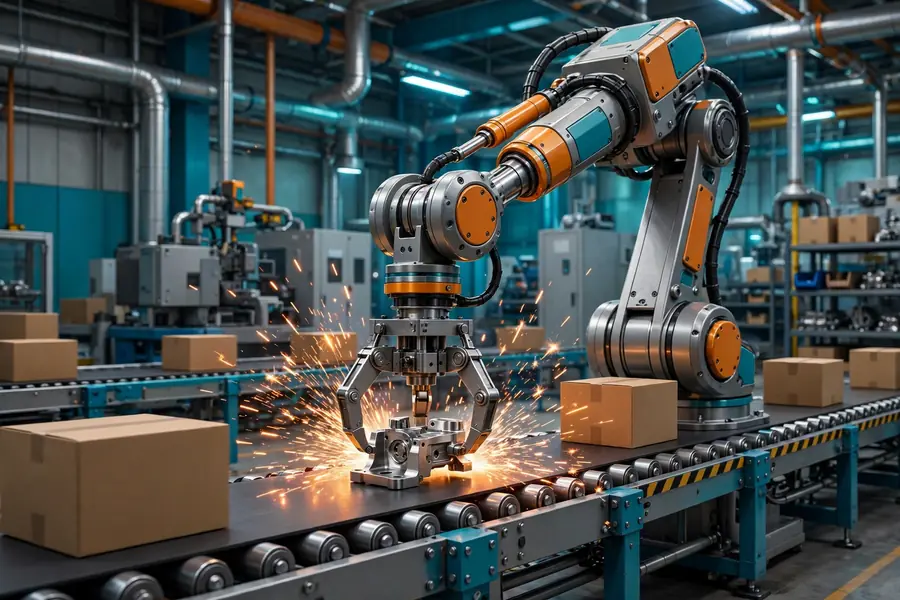
Nevertheless, automated inspection cannot identify every possible defect. Some problems require specialised testing, while others may fall below a system’s detection capability. Inspection methods should be validated against representative products and relevant failure modes. Clear acceptance criteria are essential for interpreting the results.
Automated alerts can help operators respond quickly when measurements exceed established limits. Linking inspection results with production records also makes recurring problems easier to investigate. Human oversight remains necessary to determine the cause and select appropriate corrective actions.
How Does Automation Support Packaging Quality Control?
Packaging protects products during storage, handling and distribution. Automated filling and sealing equipment helps maintain repeatable operating conditions, but defects can still occur. Material variation, contamination around sealing surfaces and incorrect machine alignment may compromise package integrity.
Leak testing provides additional information about the condition of sealed packaging. Depending on package construction, methods may involve vacuum conditions, pressure measurements or observation of escaping bubbles. Testing requirements should reflect the packaging material, expected defects and necessary sensitivity.
Manufacturers can explore package leak-testing solutions online before deciding which approaches to evaluate for their production requirements. However, the suitability of any testing method must be confirmed using representative packages and clearly defined conditions. A procedure appropriate for flexible pouches may not perform equally well with rigid containers.
Some testing systems automate selected parameters, helping operators repeat procedures consistently. This can reduce manual adjustments and improve the comparability of results between inspections. Nevertheless, automated control does not remove the need to validate detection capability or maintain testing equipment.
Can Automation Improve Workplace Safety?
Manufacturing environments may involve repetitive movements, heavy materials and potentially hazardous machinery. Automation can reduce exposure to certain risks by taking over tasks that require frequent physical intervention. Robotic loading systems, for instance, may reduce manual lifting in suitable applications.
Automated machinery can also introduce new hazards. Moving components, unexpected restarts and maintenance activities require appropriate safeguards and isolation procedures. Risk assessments should consider how employees interact with equipment during both routine operation and servicing.
Training remains important even when manual tasks are reduced. Employees must recognise abnormal machine behaviour, understand emergency procedures and know when equipment should be stopped. Safer working conditions result from careful system design and effective procedures, not automation alone.
How Do Data and Predictive Maintenance Reduce Downtime?
Unexpected machinery failures can interrupt production and increase operating costs. Connected sensors may monitor vibration, temperature and other indicators of equipment condition. Unusual changes can provide an early warning that components need attention.
Predictive maintenance uses this information to support servicing decisions. Rather than relying exclusively on fixed intervals, maintenance teams can investigate equipment when relevant warning signs emerge. The approach can help prevent avoidable breakdowns and reduce unnecessary interventions. Its usefulness depends on the quality of available data and the reliability of identified warning patterns.
Not every machine requires advanced monitoring technology. Routine inspections and preventive maintenance remain effective in many applications, particularly where failure patterns are well understood. Manufacturers should select maintenance strategies according to equipment criticality and the consequences of downtime.
What Challenges Should Manufacturers Consider Before Automating?
Automation requires investment in equipment, software, installation and employee training. The financial return depends on production volume, existing process performance and the improvements a system can realistically deliver. Total operating costs should be assessed alongside the initial purchase price.
Integrating new technology with existing equipment can be challenging. Older machines may use incompatible controls, while factory layouts can restrict installation options. These limitations should be assessed before implementation to avoid unnecessary disruption.
Changes to employee responsibilities also require planning. Operators may need additional skills in troubleshooting, monitoring and interpreting production data. Involving production and maintenance teams early can reveal practical problems that are easily overlooked during equipment selection.
A phased approach can make implementation more manageable. Testing automation in one clearly defined process allows businesses to measure performance and refine procedures. Experience from an initial project can then guide decisions about wider deployment.
How Can Automation Support Long-Term Manufacturing Improvement?
Automation is most valuable when introduced to solve a specific production problem. Reducing recurring defects, improving material flow or limiting unplanned downtime are measurable objectives. Adopting technology without a clear purpose makes it harder to determine whether an investment has been successful.
Performance measures should cover both productivity and quality. Cycle times, rejection rates, equipment availability and maintenance costs can show how automation affects manufacturing operations. Reviewing these indicators over time helps distinguish lasting improvements from temporary gains.
Employees remain central to continuous improvement. Production teams can use automated data to identify recurring problems, while engineering and quality specialists investigate potential causes. Shared information enables departments to coordinate practical corrective actions.
Automation offers significant opportunities for modern manufacturers, but its benefits depend on careful implementation. Stable processes, appropriate inspection methods and trained employees are essential for reliable results. When technology addresses well-defined needs, it can help businesses operate more efficiently while maintaining consistent product quality.