How To Make Your Business Premises Safer For Everyone To Access
A business premises should feel safe and straightforward to navigate, whether someone is arriving for work, making a delivery, visiting as a customer, or carrying out maintenance. Yet many access risks are easy to overlook because they become part of the everyday environment. A narrow walkway, an unprotected edge, poor lighting, or an awkward step might not seem like a major issue until somebody gets hurt.
Creating a safer workplace means looking at the building from the perspective of everyone who uses it and addressing hazards before they become accidents.
Start With A Thorough Walk-Through
One of the easiest ways to improve safety is to walk through the premises as though you have never been there before. Start outside and follow the routes commonly used by employees, visitors, contractors, and delivery drivers.
Look for uneven surfaces, loose paving, unexpected steps, cluttered walkways, low obstacles, and places where people may have limited visibility. Inside, pay particular attention to entrances, staircases, corridors, loading areas, mezzanines, and any spaces where floor levels change.
It can also help to carry out the inspection at different times of day, as poor lighting or busy periods may reveal risks that are less obvious when the building is quiet.
Protect Changes In Height And Exposed Edges
Falls remain one of the most serious risks around many commercial and industrial premises, particularly where people are working near stairs, platforms, raised walkways, roofs, or changes in floor level.
Installing suitable barriers and guardrails can create a clear physical boundary between safe walking areas and potential fall hazards. Businesses reviewing these areas may want to look at what Simplified Safety has to offer, particularly where permanent guardrail systems could help protect employees, contractors, and visitors around exposed edges or walkways.
The important thing is to assess each area on its own rather than assuming one solution will suit every part of the premises.
Keep Walkways Clear And Easy To Follow
People should not have to guess where they are meant to walk. Clearly defined routes can make a big difference, especially in warehouses, workshops, factories, and other premises where pedestrians and vehicles may share the same space.
Use clear signage, floor markings, barriers, and designated crossing points where appropriate. Storage should also be managed carefully so boxes, equipment, cables, and stock do not gradually creep into pedestrian routes.
Improve Lighting
Good lighting is about more than just being able to see. It helps people judge distances, notice obstacles, identify steps, and move through unfamiliar areas with greater confidence.
Check entrances, stairwells, outdoor paths, car parks, loading bays, and less frequently used corridors. Replacing failed bulbs quickly and adding lighting to darker areas can be a relatively simple improvement with a noticeable safety benefit.
Think About Different Access Needs
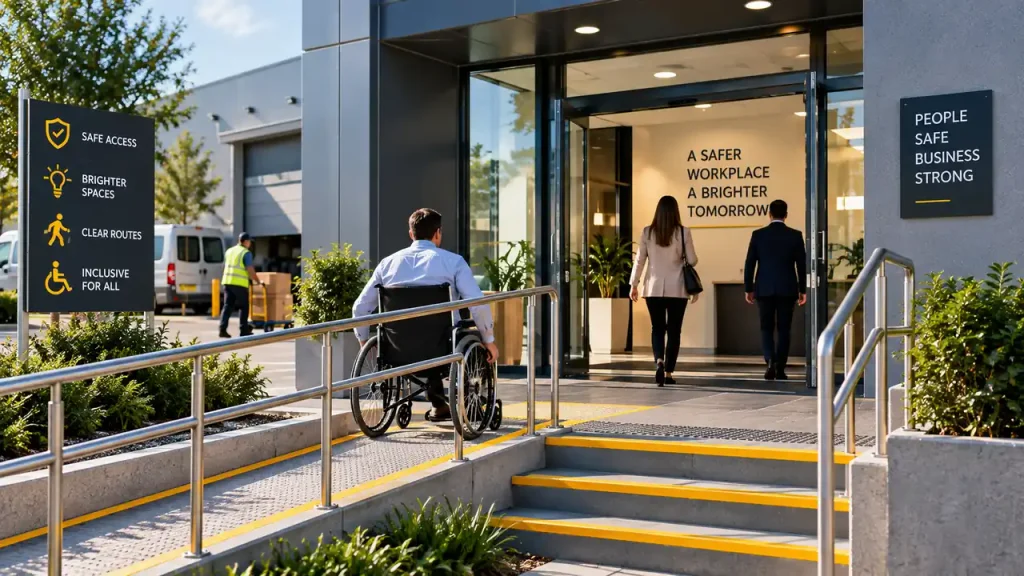
A safer premises should work for as many people as possible. Consider employees and visitors with reduced mobility, visual impairments, temporary injuries, or other access requirements.
Ramps, handrails, clear signage, accessible entrances, non-slip surfaces, and uncluttered routes can all make the environment easier to use.
Make Safety An Ongoing Process
Premises change over time. Equipment moves, teams grow, storage increases, and new working practices are introduced. That means access safety should never be treated as a one-time project.
Regular inspections, maintenance, employee feedback, and prompt repairs can help keep risks under control. By paying attention to how people actually move around the premises, businesses can create an environment that is safer, easier to navigate, and more welcoming for everyone.