
How to Create a Stronger, More Resilient Home
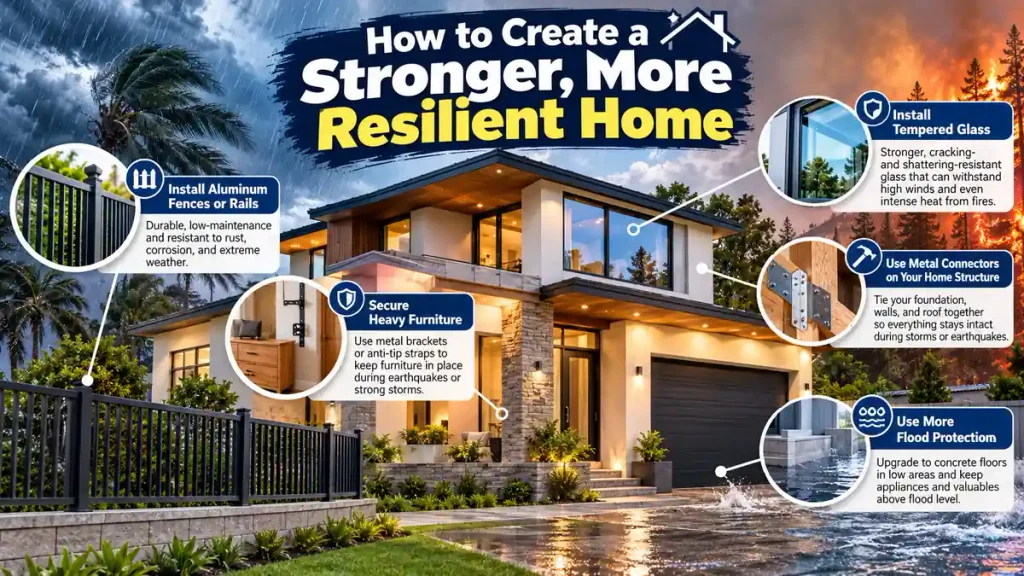
Extreme weather can quickly ruin lives and homes. Today, many people worry that one storm could permanently damage their property, causing them to lose not only the structure but also everything inside.
It makes sense, then, to look into ways to create a more resilient home that can withstand strong winds, rain, and even fires. This guide will teach you how.
Install Aluminum Fences or Rails
If you want fences or rails that last a lifetime, aluminum is the material of choice. Aluminum rails require virtually no maintenance, since you don’t need to sand or paint them over time. It also doesn’t rust or corrode, so you can be sure it’ll look as good as it did on the first day, even 5, 10, or 20 years from now. Then, there’s the unmatched strength, which means it will stay strong and standing even after extreme weather. Finding the best aluminum railing installation option is key, as expert installers will meticulously place the fence or rail with great attention to detail, ensuring it’s fully secured and able to withstand anything.
Secure Heavy Furniture
In the event of an earthquake or other extreme weather, you want to know your heavy furniture won’t shift and cause damage. To do that, you need to secure it. This is usually pretty easy to do, since you can secure all heavy furniture to your walls with metal brackets. Or you can use anti-tip straps to keep the furniture upright.
Install Tempered Glass
Your windows are a vulnerable point of your home. Of course, everyone needs windows for the views and the natural light, so giving them up altogether simply isn’t an option. Your best option is to install tempered glass, a cracking- and shattering-resistant type that can even withstand intense heat from fires.
Use Metal Connectors on Your Home Structure
One of the biggest concerns homeowners have is their home tearing apart during a storm. To avoid this, you need an ongoing connector that ties everything together. Metal connectors are key here, as they tie your foundation, walls, and roof together so everything stays intact during a big storm or earthquake.
Use More Flood Protection
You want to know your home will still stand in a flood. You also want to know that your items won’t be damaged. There are several flood protection musts for these needs – for example, getting rid of any low-level wooden floors and using concrete instead. You should also remove any appliances or valuable items from areas below flood level, such as a basement.
Your home is your sanctuary – your safe space. It’s where you should feel most at ease, no matter what happens in the world. By creating a stronger, more resilient home, you can rely on your abode even in extreme weather. Of course, remember that a resilient home doesn’t mean you should ever ignore emergency warnings; if advice is to leave your home for a safer area, always do so.