
Toyota vs Honda Reliability: Which Brand Is More Reliable?
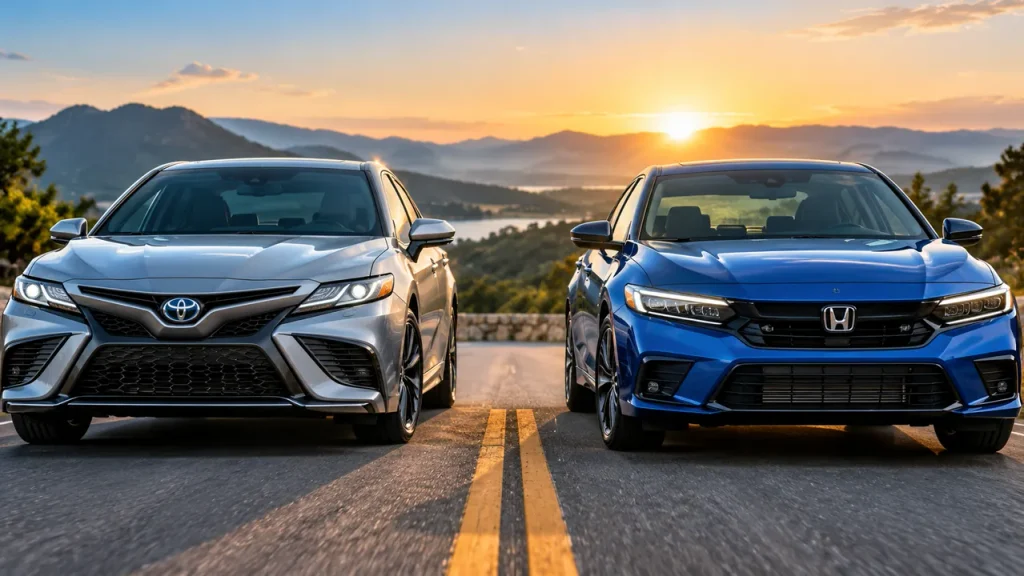
Toyota currently has the stronger overall reliability record, but Honda remains one of the most dependable car brands in the market. The best choice depends on the model, model year, powertrain, and maintenance history.
Toyota and Honda have built their reputations on dependable cars, practical engineering, and relatively low ownership costs. For years, buyers have compared the two brands when shopping for a sedan, SUV, hybrid, or family vehicle.
Current reliability data gives Toyota an advantage at the brand level. Consumer Reports ranked Toyota first for predicted reliability in its 2026 survey, while Honda ranked fourth. Toyota also performed strongly in long-term used-car reliability.
That does not mean every Toyota is more reliable than every Honda. A well-maintained Honda Civic can easily be a better purchase than a neglected Toyota. The specific vehicle matters just as much as the badge on the hood.
Toyota vs Honda Reliability at a Glance
| Reliability Factor | Toyota | Honda |
|---|---|---|
| Consumer Reports 2026 new-car reliability rank | #1 | #4 |
| Consumer Reports predicted reliability score | 66 | 59 |
| General reliability reputation | Excellent | Excellent |
| Hybrid experience | Excellent | Strong |
| Used-car reliability | Excellent | Very good |
| Repair costs | Generally low | Generally low |
| Best known strengths | Longevity, hybrids, SUVs | Sedans, compact cars, practicality |
Consumer Reports based its 2026 reliability rankings on owner survey data covering hundreds of thousands of vehicles. Toyota reached the top position, while Honda remained among the highest-rated brands.
Why Toyota Is Ahead in Reliability
Toyota’s strongest advantage is consistency across much of its lineup.
The company has used relatively conservative engineering strategies for many years. Toyota has also built extensive experience with hybrid powertrains, beginning with the Prius and expanding the technology across its lineup.
That approach has helped Toyota develop a strong reputation for long-term dependability.
Consumer Reports placed Toyota first in its 2026 predicted reliability ranking. The improvement of models such as the Camry, Tacoma, and Tundra helped the brand move back to the top.
The redesigned 4Runner also made a solid initial showing.
Toyota does have exceptions. Some redesigned models have experienced reliability problems, showing that even a highly rated manufacturer can have weaker model years.
This is one reason buyers should research the exact vehicle instead of relying only on the brand name.
Honda Is Still Highly Reliable
Honda remains a strong choice for buyers who want a dependable vehicle.
Consumer Reports ranked Honda fourth for predicted reliability in its 2026 rankings. Its sedans and SUVs have also performed well in long-term reliability research.
Honda’s reputation is particularly strong around vehicles such as the Civic and Accord.
The Civic is known for its efficient engines, practical design, and relatively low ownership costs. The Accord has also built a long history as a dependable midsize sedan.
Honda’s position is important because Toyota’s lead does not mean Honda has become unreliable.
It simply means Toyota currently has the stronger brand-level reliability results.
Toyota vs Honda: Which One Lasts Longer?
There is no fixed mileage number that applies to every Toyota or Honda.
A vehicle’s lifespan depends on several factors, including:
- Maintenance
- Driving habits
- Mileage
- Climate
- Road conditions
- Engine design
- Transmission
- Accident history
- Rust
- Previous ownership
A properly maintained vehicle can remain dependable for many years.
This is especially important when buying used. A ten-year-old Toyota with complete service records may be a better purchase than a five-year-old Honda that was poorly maintained.
The same rule works in reverse.
Brand reputation helps narrow the search, but vehicle condition should make the final decision.
Toyota Corolla vs Honda Civic Reliability
The Toyota Corolla and Honda Civic are two of the most popular compact cars associated with long-term reliability.
Toyota has an advantage in current dependability rankings. The Corolla performed particularly well in J.D. Power’s 2025 Vehicle Dependability Study and ranked highest among compact cars.
The Civic remains a strong competitor.
Honda’s compact sedan has a long history of dependable engines, practical interiors, and reasonable ownership costs.
For buyers who care only about the latest broad reliability rankings, the Corolla has the advantage.
For someone who prefers the Civic’s design, driving feel, interior layout, or features, Honda remains a sensible choice.
Toyota Camry vs Honda Accord Reliability
The Toyota Camry and Honda Accord have competed in the midsize sedan market for decades.
Both have strong reputations, but current reliability information gives Toyota the edge.
The Camry performed extremely well in recent dependability research. Its reliability also improved after the changes made for the newer generation.
The Accord remains highly regarded for its combination of comfort, efficiency, practicality, and long-term usability.
For buyers choosing between these two vehicles, model year is important.
A newer redesign can introduce technology or mechanical changes that affect reliability. A proven older generation may sometimes offer a more predictable ownership experience.
Toyota RAV4 vs Honda CR-V Reliability
The Toyota RAV4 and Honda CR-V are two of the most popular compact SUVs in the United States.
Both offer practical interiors, good fuel economy, and strong reputations for dependability.
Toyota currently has an advantage in major dependability rankings. The RAV4 ranked highest among compact SUVs in J.D. Power’s 2025 Vehicle Dependability Study.
The CR-V remains a strong alternative.
Honda has produced the CR-V for many years, and the model has become one of the company’s most important vehicles.
If reliability is the main priority, the RAV4 has the stronger current case. Buyers should still compare the exact model year and powertrain before making a decision.
Toyota vs Honda Hybrid Reliability
Hybrid reliability is an important part of this comparison.
Toyota has been a leader in hybrid technology for decades. The Prius helped establish Toyota as one of the world’s best-known hybrid manufacturers.
Today, Toyota offers hybrid versions across much of its lineup.
Honda also has significant experience with hybrid vehicles. Its hybrid technology has appeared in models such as the Accord and CR-V.
Modern hybrids should not automatically be considered unreliable because they use additional electrical components.
Consumer Reports’ latest research found conventional hybrids to be among the more reliable powertrain choices.
The distinction between conventional hybrids and plug-in hybrids is important. Plug-in hybrids use larger batteries and additional systems, while conventional hybrids do not need to be connected to an external charger.
Is Toyota Cheaper to Maintain Than Honda?
Toyota and Honda both tend to have reasonable maintenance costs compared with many other brands.
However, Toyota is not automatically cheaper to maintain.
The actual cost depends on the vehicle.
A small Corolla will usually have different maintenance expenses from a Toyota Tundra. A Honda Civic will have different costs from a Honda Pilot.
Routine maintenance normally includes items such as:
- Engine oil
- Filters
- Brake components
- Tires
- Fluids
- Spark plugs
- Battery
- Scheduled inspections
The cost of labor also varies by location.
For this reason, buyers should compare maintenance schedules for the exact models they are considering.
Which Brand Is Better for a Used Car?
Toyota and Honda are both excellent starting points for a used-car search.
Toyota currently has a slight advantage in long-term reliability rankings. Consumer Reports ranked Toyota second among brands for used-car reliability in its latest published ranking, while Honda ranked fourth.
That is a strong result for both manufacturers.
Used-car buyers should pay close attention to service records.
A professional inspection can reveal problems that are impossible to identify from a short test drive.
Before buying a used Toyota or Honda, check:
- Vehicle history
- Maintenance records
- Mileage
- Accident history
- Tire condition
- Brake condition
- Transmission behavior
- Engine leaks
- Rust
- Warning lights
- Recall history
The condition of the individual vehicle should always be part of the final decision.
Do Newer Toyota and Honda Models Have Reliability Problems?
No manufacturer produces perfect vehicles.
New model launches and major redesigns can create reliability challenges.
New vehicles often introduce new engines, transmissions, electronics, software, driver-assistance systems, or infotainment technology.
Those changes can create problems that were not present in the previous generation.
Consumer Reports has found that newly introduced and redesigned vehicles can have more reliability problems during their early production years.
That does not mean buyers should avoid every new Toyota or Honda.
It means buyers who value predictable reliability may benefit from researching the first model year carefully.
Does Maintenance Matter More Than the Brand?
Maintenance is one of the most important factors in long-term reliability.
Toyota and Honda vehicles still require regular service.
Skipping oil changes, ignoring warning lights, delaying brake repairs, or neglecting transmission service can shorten the useful life of almost any vehicle.
The opposite is also true.
Following the manufacturer’s maintenance schedule can help protect the engine, transmission, cooling system, brakes, and other major components.
For used-car shoppers, maintenance records can sometimes tell you more about a vehicle’s future than its brand name.
Which Brand Has Better Engine Reliability?
Both Toyota and Honda have produced many highly regarded engines.
Toyota has a particularly strong reputation for durable powertrains and hybrid systems.
Honda is also known for efficient and durable engines, especially in vehicles such as the Civic and Accord.
There is no single answer for every model year.
Engine design changes over time, and some engines have stronger reliability records than others.
Anyone buying a used vehicle should research the exact engine and transmission combination rather than assuming every Toyota or Honda powertrain is equally dependable.
Toyota vs Honda Reliability: Which Brand Should You Buy?
If reliability is your top priority, Toyota currently has the stronger overall position.
Its first-place ranking in Consumer Reports’ 2026 predicted reliability survey gives it a clear advantage over Honda, which ranked fourth.
Toyota also performs strongly in long-term used-car reliability.
Honda, however, remains an excellent choice.
Its strong position in reliability research and its history with models such as the Civic and Accord make it a brand worth considering.
The final decision should come down to the individual model, model year, powertrain, ownership costs, and maintenance history.
For a new buyer who wants the strongest current brand-level reliability results, Toyota is the safer pick.
For someone comparing specific models, the answer can change.
A Civic may make more sense than a Corolla for one buyer. A Camry may make more sense than an Accord for another. The right decision depends on the vehicle rather than the badge alone.
Final Verdict
Toyota wins the current Toyota vs Honda reliability comparison, but the difference is not large enough to make Honda a poor choice.
Toyota’s latest Consumer Reports reliability ranking puts it ahead of Honda, while Honda continues to rank among the strongest mainstream brands.
Both manufacturers offer dependable cars, SUVs, and hybrids.
If you are buying new, Toyota currently has the reliability advantage.
If you are buying used, inspect the individual vehicle carefully. A well-maintained Toyota or Honda can provide years of dependable transportation.
The smartest choice is the vehicle with the strongest reliability record, the right powertrain, a good maintenance history, and a condition that matches its price.
Frequently Asked Questions
Is Toyota more reliable than Honda?
Yes, based on the latest Consumer Reports reliability ranking. Toyota ranked first for predicted reliability in 2026, while Honda ranked fourth.
Is Honda still a reliable car brand?
Yes. Honda remains one of the strongest mainstream brands for reliability. Its Civic, Accord, CR-V, and other models have long been popular among reliability-focused buyers.
Which lasts longer, Toyota or Honda?
Both can last for many years with proper maintenance. Toyota currently has the stronger brand-level reliability record, but individual vehicle condition and maintenance can make a major difference.
Is the Toyota Corolla more reliable than the Honda Civic?
Current dependability data favors the Corolla, but the Civic also has a strong reliability reputation. The exact model year and powertrain should be considered before buying.
Is the Toyota Camry more reliable than the Honda Accord?
Recent dependability results favor the Camry. However, the Accord remains a reliable midsize-car choice and should not be dismissed.
Is the Toyota RAV4 more reliable than the Honda CR-V?
Current dependability research gives the RAV4 an advantage. Both models remain strong options for buyers seeking a reliable compact SUV.
Are Toyota hybrids reliable?
Yes. Toyota has extensive experience with hybrid technology, and conventional hybrids continue to perform well in reliability research.
Are Honda hybrids reliable?
Honda hybrids can also be dependable. The reliability of a particular hybrid depends on its model year, powertrain, maintenance, and ownership history.
Is Toyota cheaper to maintain than Honda?
Not always. Maintenance costs vary by model, mileage, location, labor rates, and the type of service required.
Which is better for a used car, Toyota or Honda?
Both are strong choices. Toyota currently has a slight advantage in long-term reliability rankings, but the condition and maintenance history of the individual used vehicle are more important.
Which brand should I choose if reliability is my main priority?
Toyota is currently the stronger choice based on broad reliability data. However, comparing the exact Toyota and Honda models you are considering can lead to a different result.
The Bottom Line
Toyota and Honda remain two of the strongest choices for buyers who want dependable transportation.
Toyota currently has the edge in broad reliability rankings, especially for new vehicles. Honda remains highly competitive and continues to offer several models with strong reliability records.
The best purchase is not simply the car with the most reliable badge. It is the vehicle that combines a strong reliability history with proper maintenance, a suitable powertrain, and good overall condition.
For the latest brand-level reliability data, Consumer Reports is the primary source used for the current comparison.
SEO Deliverables
SEO Meta Title:
Toyota vs Honda Reliability: Which Is Better?
SEO Meta Description:
Compare Toyota vs Honda reliability, maintenance, hybrids, used cars, and popular models to see which brand offers better long-term dependability.
SEO-Friendly URL Slug:toyota-vs-honda-reliability
Primary Keyword:
Toyota vs Honda reliability
Secondary Keywords:
Toyota reliability
Honda reliability
Toyota vs Honda
Toyota or Honda
Toyota longevity
Honda longevity
Toyota vs Honda maintenance
Toyota vs Honda dependability
Corolla vs Civic reliability
Camry vs Accord reliability
RAV4 vs CR-V reliability
Toyota hybrid reliability
Honda hybrid reliability
Featured Image Prompt:
Photorealistic premium automotive editorial image showing a modern Toyota vehicle and a modern Honda vehicle positioned side by side on a clean American suburban road, balanced composition, realistic vehicle details, natural daylight, subtle dramatic lighting, clean background, professional automotive magazine photography, sharp focus, sophisticated and trustworthy appearance, spacious 16:9 landscape composition, no logos, no text, no watermark.
ALT TEXT:
Toyota and Honda vehicles side by side for a reliability comparison.


