
Sherbet vs Sorbet: What Is the Difference?
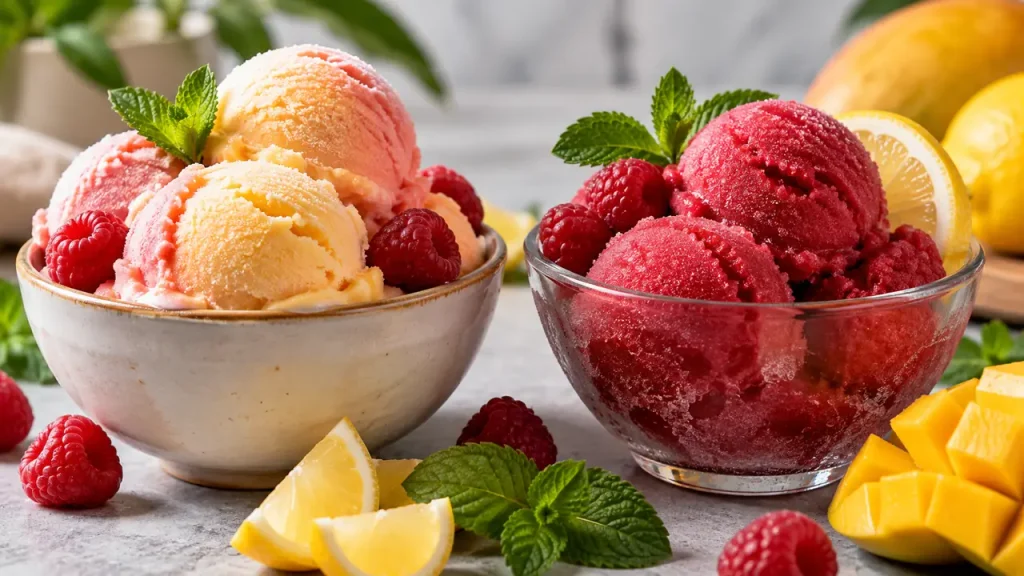
Sherbet and sorbet are similar fruit-based frozen desserts, but they are not the same. The main difference is dairy. Sherbet usually contains a small amount of milk or cream, while sorbet is made without dairy.
The names sherbet vs sorbet can be confusing because both desserts are cold, fruity, sweet, and often served in similar ways. They can also look almost identical in a dessert case.
The easiest way to remember the difference is simple. Sherbet contains some dairy, while sorbet is dairy-free.
That small ingredient difference changes the texture, richness, and best uses of each dessert.
Sherbet vs Sorbet: The Main Difference
The biggest difference between sherbet and sorbet is what goes into them.
Sherbet is usually made from fruit juice or fruit purée, sugar, water, and a small amount of dairy such as milk or cream.
Sorbet is generally made from fruit, sugar, and water. It does not contain milk or cream.
| Feature | Sherbet | Sorbet |
|---|---|---|
| Fruit-based | Usually | Usually |
| Dairy | Usually contains some | No dairy |
| Milk or cream | Common | No |
| Texture | Creamier and softer | Lighter and icier |
| Flavor | Fruity with a creamy note | Strong, fresh fruit flavor |
| Vegan | Usually no | Usually yes |
| Common uses | Dessert, scoops, frozen treats | Dessert, palate cleanser, fruit dessert |
For example, imagine two raspberry desserts.
A raspberry sherbet may contain raspberry purée, sugar, water, and milk.
A raspberry sorbet may contain raspberry purée, sugar, and water without any dairy.
Both can taste strongly of raspberry, but the sherbet will usually feel richer and creamier.
What Is Sherbet?
Sherbet is a frozen dessert made primarily from fruit, sugar, water, and a small amount of dairy.
In the United States, sherbet has traditionally been defined as a frozen product containing a limited amount of milkfat. This gives it a texture that sits between sorbet and ice cream.
Sherbet is often colorful and fruit-forward. Popular flavors include:
- Orange
- Raspberry
- Lime
- Strawberry
- Rainbow
- Pineapple
- Lemon
The small amount of dairy gives sherbet a softer and creamier mouthfeel than a typical sorbet.
Example of Sherbet
Imagine a bowl of orange sherbet.
It tastes bright and citrusy like frozen orange juice, but it has a slightly creamy texture. That creaminess comes from the dairy used in the recipe.
This is why sherbet can feel closer to ice cream than sorbet does.
What Is Sorbet?
Sorbet is a frozen dessert made without dairy.
A basic sorbet recipe often uses fruit, sugar, and water. Some recipes also include lemon juice, herbs, spices, or other flavorings.
Because there is no milk or cream, sorbet usually has a lighter and icier texture.
Common sorbet flavors include:
- Mango
- Strawberry
- Raspberry
- Lemon
- Lime
- Peach
- Watermelon
- Passion fruit
- Blueberry
Sorbet can have a very intense fruit flavor because the recipe focuses heavily on fruit and sugar.
Example of Sorbet
Consider a mango sorbet made from ripe mangoes, sugar, water, and lime juice.
The result is cold, bright, sweet, and strongly fruity. There is no creamy dairy flavor.
That makes sorbet a popular choice for people who want a refreshing frozen dessert without milk or cream.
Sorbet vs Sherbet: Which One Is Creamier?
If you compare sorbet vs sherbet, sherbet is usually the creamier option.
The reason is straightforward. Sherbet contains some dairy, while sorbet does not.
Dairy adds fat and milk solids that can make a frozen dessert feel smoother and richer.
Sorbet can still have a smooth texture, especially when it is prepared properly. However, its texture tends to feel lighter and more icy.
Think of the difference this way:
Sherbet: fruity and slightly creamy.
Sorbet: fruity, refreshing, and dairy-free.
Is Sherbet the Same as Ice Cream?
No. Sherbet and ice cream are different frozen desserts.
Ice cream generally contains substantially more milkfat and dairy ingredients. Sherbet contains much less dairy and is usually more fruit-focused.
For example, strawberry ice cream may have a rich milk and cream base with strawberries added.
Strawberry sherbet is more likely to taste like frozen strawberry with a small creamy element.
This gives sherbet a middle position between richer frozen desserts and dairy-free sorbet.
Is Sorbet Dairy-Free?
Yes, traditional sorbet is dairy-free.
That makes it a common choice for people avoiding milk and cream.
However, shoppers should still check the ingredient label. Commercial products can vary, and some frozen desserts marketed with similar names may contain ingredients that do not fit a particular dietary requirement.
If someone has a severe milk allergy, checking the complete ingredient list and allergen statement is the safest approach.
Is Sorbet Vegan?
Traditional sorbet is generally vegan because it uses fruit, sugar, and water rather than milk or cream.
Still, not every product labeled as sorbet should automatically be assumed vegan.
Some recipes may contain additional ingredients that require checking.
If you follow a strict vegan diet, look at the ingredients before buying or ordering the dessert.
Which Has a Stronger Fruit Flavor?
Sorbet often has the stronger fruit-focused taste.
Because it does not contain dairy, the flavor can come across as sharper and more direct.
For example, lemon sorbet can have a strong citrus bite, while lemon sherbet may taste slightly softer because of its dairy content.
This does not mean sherbet has a weak fruit flavor. Good sherbet can still taste intensely fruity.
The difference is mainly in the balance between fruit and creaminess.
Which Is Better for a Refreshing Dessert?
Sorbet is often the better choice if you want something light and refreshing.
Its cold, fruit-heavy character makes it especially suitable after a rich meal.
For example, restaurants may serve lemon sorbet between courses. The bright flavor can provide a clean change from heavier foods.
Sherbet can also be refreshing, but its small amount of dairy gives it a richer feel.
If you want a dessert that feels closer to ice cream, sherbet may be the better choice.
Sherbet vs Sorbet for Dairy-Free Diets
This is one of the most important differences in the sherbet vs sorbet debate.
If you are avoiding dairy, traditional sorbet is generally the better option.
Sherbet usually contains milk, cream, or another dairy ingredient.
For example:
Strawberry sherbet: strawberry, sugar, water, and dairy ingredients.
Strawberry sorbet: strawberry, sugar, water, and other non-dairy ingredients.
Always check the package if dairy avoidance is medically important.
Sherbet vs Sorbet for Texture
Texture is another easy way to tell them apart.
Sherbet tends to be:
- Soft
- Creamy
- Smooth
- Slightly rich
- Fruit-forward
Sorbet tends to be:
- Light
- Icy
- Smooth when properly churned
- Refreshing
- Strongly fruit-based
The exact texture can change depending on the recipe, sugar level, freezing method, and fruit used.
A well-made sorbet does not have to be rough or full of large ice crystals. Proper preparation can produce a smooth and scoopable dessert.
Sherbet vs Sorbet Examples
Here are some simple examples that make the difference easier to understand.
Example 1: Raspberry
Raspberry sherbet combines raspberry flavor with a small amount of dairy. The result is fruity with a creamy finish.
Raspberry sorbet focuses on raspberry, sugar, and water. The result is lighter and more refreshing.
Example 2: Lemon
Lemon sherbet has a citrus flavor with some creaminess.
Lemon sorbet delivers a sharper lemon taste without dairy.
Example 3: Mango
Mango sherbet can taste like creamy frozen mango.
Mango sorbet usually tastes brighter and more directly fruity.
Example 4: Orange
Orange sherbet is often creamy enough to remind people of a frozen orange dessert.
Orange sorbet has a cleaner citrus profile and lighter texture.
Sorbet vs Sherbet: Which One Should You Choose?
The best choice depends on what you want from the dessert.
Choose sherbet if you:
- Like a creamy texture
- Want a fruit-based dessert with some dairy
- Prefer something between ice cream and sorbet
- Enjoy softer frozen desserts
Choose sorbet if you:
- Avoid dairy
- Want a lighter frozen dessert
- Prefer a strong fruit flavor
- Want a refreshing dessert
- Follow a vegan diet and have confirmed the ingredients
Neither dessert is automatically better. They simply provide different eating experiences.
Are Sherbet and Sorbet Pronounced Differently?
Yes.
Sherbet is commonly pronounced like “SHUR-bit.”
Sorbet is commonly pronounced like “sor-BAY.”
A common mistake is adding an extra “r” to sherbet and saying “sher-bert.”
The standard spelling is sherbet.
The word “sherbert” is also encountered as a variant spelling and pronunciation, especially in American usage, but sherbet is the standard form for the frozen dessert.
Why Are Sherbet and Sorbet Names So Similar?
The similar names are not a coincidence.
Both words have historical connections to older words associated with sweetened drinks and chilled refreshments.
The terms traveled through different languages before becoming established in English.
Over time, their meanings developed differently across regions and food traditions.
That history helps explain why sherbet vs sorbet can be confusing even though the two desserts have a clear modern distinction in American usage.
Sherbet in the United States vs the United Kingdom
There is an important regional difference in the word sherbet.
In the United States, sherbet usually refers to a fruity frozen dessert containing a small amount of dairy.
In British English, sherbet can refer to a fizzy fruit-flavored powder or candy.
That means the same word can describe different foods depending on the country.
For example, an American ordering raspberry sherbet would generally expect a frozen dessert.
In Britain, the word may bring to mind a fizzy sweet powder.
This regional difference is another reason people sometimes become confused about the term.
Is Sherbet Healthier Than Sorbet?
There is no simple winner.
Both can contain significant amounts of added sugar.
Sorbet does not contain dairy, so it generally avoids the milkfat found in sherbet. Sherbet, however, may provide some nutrients from its dairy ingredients.
The nutritional value depends heavily on the specific product and recipe.
A homemade fruit sorbet with modest sugar will have a different nutritional profile from a heavily sweetened commercial product.
If nutrition matters to you, check the serving size and ingredient label instead of choosing based only on the name.
Does Sorbet Have Dairy?
Traditional sorbet does not contain dairy.
That is one of its defining characteristics.
A basic sorbet recipe uses fruit, sugar, and water rather than milk or cream.
Still, commercially prepared desserts can vary. If you need to avoid dairy because of an allergy or medical condition, check the product label and ask about preparation methods.
Does Sherbet Have Milk?
Yes, American-style sherbet generally contains a small amount of dairy.
Milk or cream can be used to create its softer, creamier texture.
This is the key distinction to remember:
Sherbet = fruit + sugar + water + some dairy
Sorbet = fruit + sugar + water, without dairy
Recipes can include other ingredients, but this basic difference is useful for understanding the two desserts.
Sherbet vs Sorbet vs Ice Cream
These three desserts are often confused because they are all frozen and sweet.
| Dessert | Dairy | Main Characteristic | Texture |
|---|---|---|---|
| Sorbet | No | Fruit-forward | Light and icy |
| Sherbet | Some | Fruit with mild creaminess | Creamy and soft |
| Ice cream | Yes | Rich dairy base | Rich and creamy |
This comparison makes the difference easier to remember.
Sorbet sits on the dairy-free side.
Sherbet sits between sorbet and ice cream.
Ice cream has the richest dairy profile of the three.
Frequently Asked Questions
Is sherbet or sorbet better?
It depends on your preference. Sherbet is better if you want a creamy fruit dessert. Sorbet is better if you want a dairy-free and lighter option.
What is the main difference between sherbet and sorbet?
The main difference is dairy. Sherbet usually contains a small amount of milk or cream, while sorbet contains no dairy.
Is sorbet healthier than sherbet?
Not automatically. Sorbet contains no dairy, but both desserts can contain substantial amounts of sugar. Nutrition depends on the recipe and serving size.
Is sherbet dairy-free?
Usually no. American-style sherbet generally contains a small amount of dairy.
Is sorbet dairy-free?
Yes. Traditional sorbet is made without dairy.
Is sorbet vegan?
Traditional sorbet is generally vegan, but you should check the ingredients of commercial products before assuming they are vegan.
Which is creamier, sherbet or sorbet?
Sherbet is generally creamier because it contains some dairy. Sorbet has a lighter, icier texture.
Why do people confuse sherbet and sorbet?
The names sound similar, both are fruit-based frozen desserts, and they are often displayed and served in similar ways.
Can sherbet taste like ice cream?
Yes. Sherbet has a small amount of dairy, so it can have a creamy texture that reminds people of ice cream. It is usually more fruit-focused and less rich.
Can sorbet contain milk?
Traditional sorbet does not contain milk. If a product contains milk or cream, it is not a traditional dairy-free sorbet.
What is the correct pronunciation of sherbet?
Sherbet is commonly pronounced “SHUR-bit.” The pronunciation “sher-bert” is common in informal speech, but the standard word is sherbet.
What is the correct pronunciation of sorbet?
Sorbet is commonly pronounced “sor-BAY.”
The Simple Way to Remember Sherbet vs Sorbet
The easiest way to remember sherbet vs sorbet is to focus on dairy.
Sherbet has some dairy. Sorbet does not.
Sherbet gives you a fruity flavor with a softer and creamier texture. Sorbet gives you a lighter, colder, and more fruit-focused experience.
So, if you are standing in front of a freezer and trying to decide between the two, think about what you want. Choose sherbet for a creamy fruit dessert. Choose sorbet for a dairy-free frozen treat with a strong fruit flavor.
The names may sound almost alike, but the difference is easy once you know what to look for.
