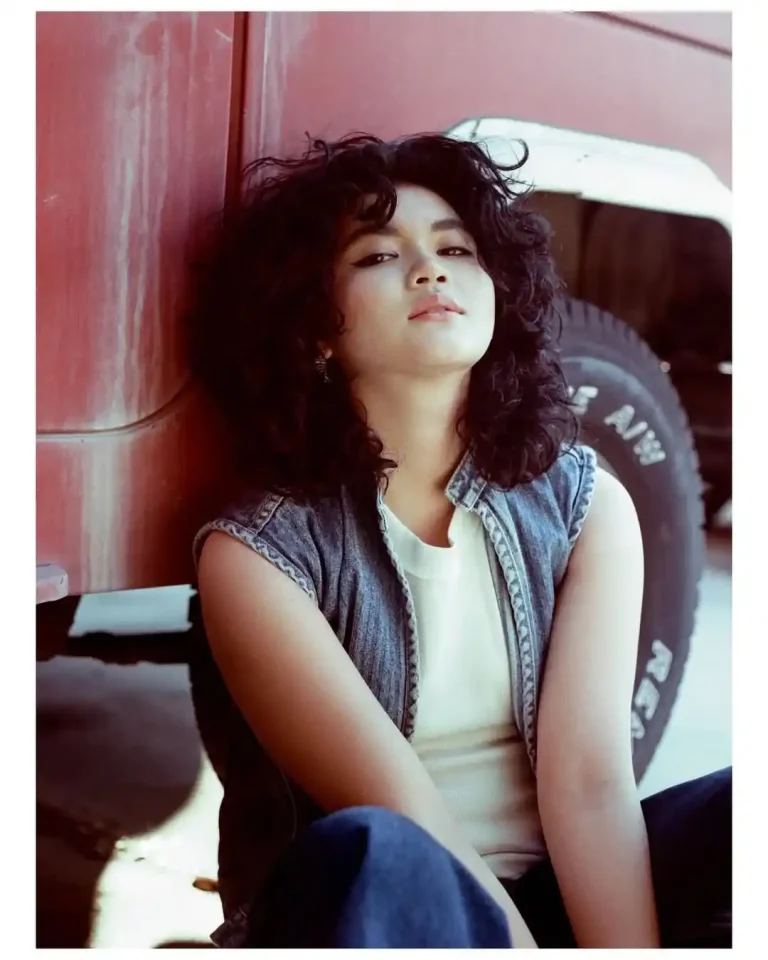
Zohran Mamdani Wife Ethnicity: Rama Duwaji’s Syrian Roots
Zohran Mamdani Wife Ethnicity: Rama Duwaji’s Syrian Roots
Table of Contents
- Quick Facts About Rama Duwaji
- What Is Zohran Mamdani’s Wife’s Ethnicity?
- Rama Duwaji’s Father’s Ethnicity
- Rama Duwaji’s Mother’s Ethnicity
- Is Rama Duwaji Syrian?
- What Is Rama Duwaji’s Nationality?
- Where Did Rama Duwaji Grow Up?
- What Is Zohran Mamdani’s Own Ethnicity?
- Frequently Asked Questions
- Conclusion
Quick Facts About Rama Duwaji
| Attribute | Details |
|---|---|
| Full Name | Rama Sawaf Duwaji |
| Date of Birth | June 30, 1997 |
| Birthplace | Houston, Texas, USA |
| Nationality | American |
| Ethnicity | Syrian Arab (Levantine Arab) |
| Parents | Marwan Duwaji (father), Bariah Dardari (mother) |
| Profession | Artist and illustrator |
What Is Zohran Mamdani’s Wife’s Ethnicity?
Zohran Mamdani’s wife, Rama Duwaji, is ethnically Syrian. She is a Syrian American artist: born in Houston, Texas, to Syrian Muslim parents from Damascus, and raised partly in Texas, New Jersey, and Dubai. Her campaign and press materials describe her plainly as “ethnically Syrian,” and her art — which explores Arab identity, sisterhood, and Palestinian solidarity — is deeply rooted in that heritage.
Duwaji’s full name is Rama Sawaf Duwaji. Her parents, Marwan Duwaji and Bariah Dardari, are both from Damascus, Syria; her father is a software developer and her mother a pediatrician who has also worked on humanitarian missions in war zones with the Syrian American Medical Society. The family moved from Wayne, New Jersey, to Dubai in 2006, when Duwaji was nine, and she spent the rest of her childhood in the Gulf states.
She met Zohran Mamdani on the dating app Hinge — a “Hinge success story,” as Mamdani has called it. The couple held a private nikkah (Muslim wedding ceremony) in Dubai in December 2024, followed by a civil ceremony at the New York City Clerk’s Office in 2025. When Mamdani won the New York City mayoral election in November 2025 and took office in January 2026, Duwaji became the city’s first lady — a Syrian American artist in Gracie Mansion.

Rama Duwaji’s Father’s Ethnicity
Rama Duwaji’s father, Marwan Duwaji, is Syrian. A software developer from Damascus, he married Bariah Dardari shortly before Rama’s birth in Houston in 1997, and the family later relocated — first within the United States, then to Dubai for his and his wife’s work.
Marwan and Bariah were supportive of their daughter’s artistic talent from an early age, even as they encouraged her to keep her career plans practical. Duwaji has said drawing was her solace as a child — she would get in trouble for doodling in her school textbooks — and her parents’ support helped carry that childhood habit into a professional career: a BFA cum laude from Virginia Commonwealth University in 2019 (beginning at its Qatar campus in Doha, then transferring to Richmond, Virginia), followed by an MFA in illustration from the School of Visual Arts in New York in 2024.
The Duwaji family’s Damascus roots place them in one of the oldest continuously inhabited cities in the world, and in the Levantine Arab cultural tradition — the heritage that Rama’s art continually circles back to, from jasmine motifs to Arabic calligraphy-inspired imagery.
Rama Duwaji’s Mother’s Ethnicity
Rama Duwaji’s mother, Bariah Dardari, is Syrian. A pediatrician from Damascus, Dardari’s appointment at the American Hospital in Dubai was the reason the family moved from New Jersey to the United Arab Emirates in 2006. Beyond her medical career, she has worked on humanitarian missions in war zones with the Syrian American Medical Society.
Dardari’s humanitarian work — bringing medical care to conflict zones — is part of the moral fabric Duwaji grew up in, and it shows in the younger woman’s art. Duwaji’s illustrations and animations frequently address themes of injustice, displacement, and resistance: works in solidarity with Palestinian families, pieces on the Gaza hunger crisis, and critiques of U.S. complicity that have been shared widely on social media.
Like her husband, Dardari is a Syrian Muslim from Damascus, and together the couple raised Rama in a household that was culturally Syrian, religiously Muslim, and — through the Dubai years — cosmopolitan in the particular way of the Gulf’s expatriate communities.
Is Rama Duwaji Syrian?
Yes. Rama Duwaji is ethnically Syrian — both of her parents are Syrian Muslims from Damascus, and she has been described in press coverage and campaign materials as “ethnically Syrian” and a “Syrian American” artist. Her work has appeared in The New Yorker, The Washington Post, the BBC, and the Tate Modern, and it consistently explores Arab and specifically Levantine identity.
Her Syrian identity is not incidental to her art; it is its subject. Using drawn portraiture and animation, Duwaji examines sisterhood, communal experience, and political resistance through a Middle Eastern lens. One of her most widely shared illustrations — three figures beneath the Arabic phrase “we won’t leave” — was created in solidarity with Palestinian families in Sheikh Jarrah. Her ceramics, including hand-illustrated blue-and-white plates, draw on regional craft traditions.
She is sometimes described as “Dubai-raised,” which is accurate — she lived in Dubai from age nine — but her ethnicity is Syrian, her nationality is American, and her artistic identity is that of a Syrian American in the diaspora. It is a combination that has drawn comparisons to other diaspora artists whose heritage shapes their work, and it places her within a broader conversation about heritage and tradition in contemporary art.

What Is Rama Duwaji’s Nationality?
Rama Duwaji’s nationality is American. She was born in Houston, Texas, on June 30, 1997, and despite spending her childhood years in Dubai, she returned to the United States for university — first at Virginia Commonwealth University’s Qatar campus, then at its Richmond, Virginia, campus, where she graduated with honors in 2019 — and moved to New York City in 2021 for her master’s degree.
She is now based in Brooklyn, New York, where she built her career as a multidisciplinary artist working in illustration, ceramics, and editorial design before her husband’s mayoral campaign made her a public figure. Her American nationality and Syrian ethnicity together make her a classic second-generation immigrant story: born in the U.S., raised between cultures, and producing art that speaks to both.
That duality was on display throughout Mamdani’s campaign, for which Duwaji designed key visual branding — the bold yellows, oranges, and pinks that became the campaign’s signature. The New York Post noted that she “quietly helped boost the Democratic socialist’s viral social media presence” while staying out of the spotlight herself.
Where Did Rama Duwaji Grow Up?
Rama Duwaji was born in Houston, Texas, and spent her early childhood between Texas and Wayne, New Jersey. In 2006, when she was nine, the family moved to Dubai, United Arab Emirates, following her mother’s appointment at the American Hospital there, and Duwaji spent the remainder of her childhood in the Gulf states.
That tricontinental upbringing — Texas, New Jersey, Dubai — shaped her art’s preoccupation with identity, belonging, and duality. After high school she studied communication arts at Virginia Commonwealth University, starting at the school’s satellite campus in Doha, Qatar, before transferring to Richmond, Virginia, where she earned her BFA cum laude in 2019. Artist residencies in Beirut and Paris followed, and in 2021 she moved to New York City for her MFA at the School of Visual Arts, which she completed in 2024 with a thesis on making and sharing dishes as a communal act.
After graduate school she was one of 24 artists selected from more than 500 applicants for a residency in the Catskill Mountains — a marker of how seriously the art world took her before politics ever entered the picture.
What Is Zohran Mamdani’s Own Ethnicity?
Readers asking about Zohran Mamdani’s wife’s ethnicity often want the full picture, so here it is: Zohran Mamdani is of Indian descent, born in Kampala, Uganda, and Muslim by faith. He is the son of Indian-Ugandan parents — his mother is the acclaimed filmmaker Mira Nair — and he moved to New York City as a child.
Mamdani, a Democratic state assemblyman from Queens, won the New York City mayoral election in November 2025, becoming the city’s first Muslim mayor, its first mayor born in Africa, and its youngest mayor since 1892. He took office in January 2026. His own background — Indian, Ugandan-born, Muslim, naturalized American — paired with his wife’s Syrian American story, made the couple a symbol of the city’s immigrant tapestry during the campaign.
In his victory speech, Mamdani addressed his wife directly: “And to my incredible wife, Rama, hayati” — using the Arabic word for “my life” — a small linguistic nod to the Syrian heritage that is the subject of this article.
Frequently Asked Questions
What is Zohran Mamdani’s wife’s ethnicity?
Rama Duwaji is ethnically Syrian. Both of her parents are Syrian Muslims from Damascus, and she is described as a Syrian American artist.
What is Rama Duwaji’s nationality?
American. She was born in Houston, Texas, on June 30, 1997.
Where did Rama Duwaji grow up?
She was born in Houston, spent early childhood in Texas and New Jersey, and moved to Dubai at age nine, where she spent the rest of her childhood.
What does Rama Duwaji do?
She is an artist and illustrator whose work has appeared in The New Yorker, The Washington Post, the BBC, and the Tate Modern. She earned her MFA in illustration from the School of Visual Arts in 2024.
How did Rama Duwaji and Zohran Mamdani meet?
They met on the dating app Hinge. Mamdani has called their relationship a “Hinge success story.”
What is Zohran Mamdani’s ethnicity?
Mamdani is of Indian descent, born in Kampala, Uganda, and is Muslim. He became New York City’s first Muslim mayor in January 2026.
Conclusion
Zohran Mamdani’s wife, Rama Duwaji, is ethnically Syrian — a Syrian American artist born in Houston to Damascus-born parents, raised between Texas, New Jersey, and Dubai, and trained at VCU and the School of Visual Arts. Her Levantine Arab heritage runs through her acclaimed illustration and ceramics work, from jasmine motifs to unflinching political commentary, and it made her a distinctive figure as she stepped into the role of New York City’s first lady in 2026. Paired with Mamdani’s own Indian-Ugandan Muslim background, the couple’s story is a portrait of the modern American immigrant experience in all its complexity. Read more about her background on Rama Duwaji’s Wikipedia page.