
World Autism Awareness Day 2026: Meaning, History, Parenting Tips, and Support for Mothers
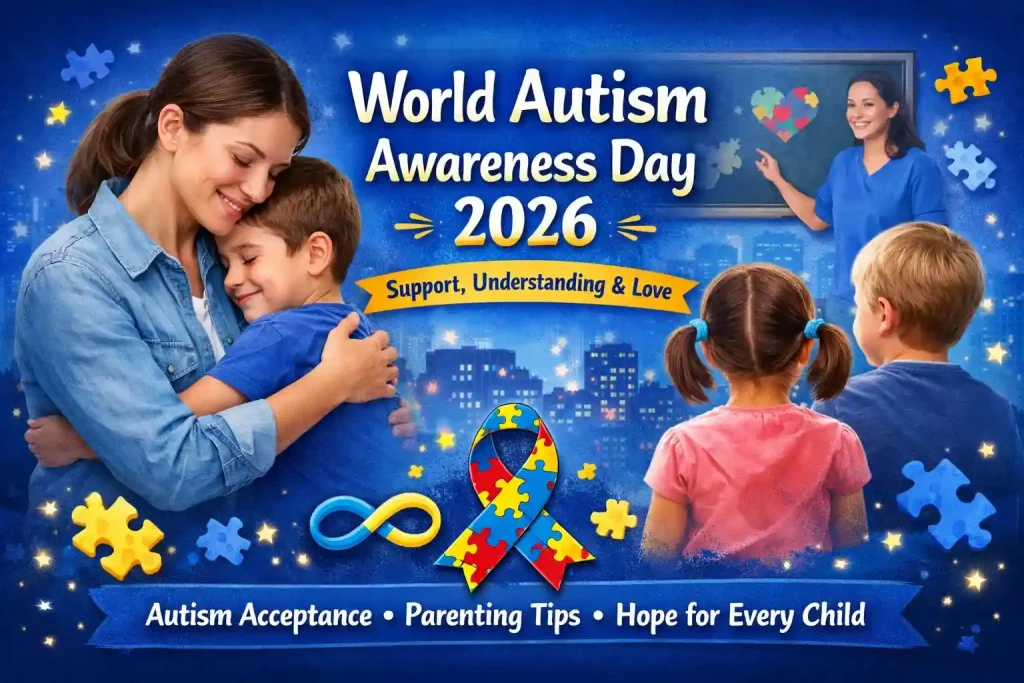
What Is World Autism Awareness Day?
World Autism Awareness Day is observed every year on April 2 across the world to increase public understanding of autism and encourage inclusion for people living with autism spectrum conditions. It is a day that reminds families, schools, healthcare professionals, and communities that autism should be understood with patience, respect, and practical support.
This day is not only about awareness but also about acceptance. Over the years, the global conversation has shifted from simply recognizing autism to creating environments where autistic children and adults can thrive without discrimination.
For many families, especially parents of autistic children, this day has emotional importance because it gives visibility to their daily challenges, achievements, and hopes.
In many countries, schools organize awareness sessions, public buildings are lit in blue, and social media campaigns spread positive autism messages.
Why Is World Autism Awareness Day Celebrated on April 2?
The date of April 2 was officially selected to create one globally recognized day focused entirely on autism awareness and support.
The purpose behind choosing one international day is simple:
- To improve understanding of autism in society
- To encourage early diagnosis
- To support families
- To promote educational inclusion
- To reduce social stigma
On this day, autism organizations, schools, hospitals, and communities often organize awareness walks, educational talks, and support programs.
Many people also wear blue clothing because blue has become strongly associated with autism awareness campaigns.
History of World Autism Awareness Day
United Nations officially established World Autism Awareness Day in 2007 to improve global understanding of autism and encourage better support systems for autistic individuals.
Since then, each year has focused on stronger inclusion in education, employment, healthcare, and social participation.
The annual observance has helped governments and health systems pay more attention to:
- Early childhood developmental screening
- Autism education programs
- Parent support initiatives
- Community inclusion
In recent years, many autism advocates also encourage replacing only “awareness” language with stronger “acceptance and inclusion” messages.
Understanding Autism Spectrum Disorder in Children
Autism Spectrum Disorder (ASD) is a developmental condition that affects communication, behavior, sensory processing, and social interaction.
It is called a spectrum because autism appears differently in each child.
Some children may have mild communication differences, while others may require daily structured support.
Common Early Signs of Autism
| Sign | Description |
|---|---|
| Limited eye contact | Child avoids direct visual interaction |
| Delayed speech | Speaking begins later than expected |
| Repetitive movement | Hand flapping, rocking, repeating actions |
| Sensory sensitivity | Strong reactions to sound, light, texture |
| Difficulty with social response | Limited reaction to names or interaction |
Parents often first notice these signs during toddler years.
Early identification can significantly improve long-term support outcomes.
Why Autism Awareness Matters in Modern Society
Autism awareness is important because many autistic children still face misunderstanding in schools, social spaces, and even extended families.
Without awareness, behaviors linked to autism are often misunderstood.
For example:
- A child avoiding eye contact may be seen as rude
- A child covering ears may be judged as difficult
- Repetitive behavior may be misunderstood as unusual discipline problems
Awareness helps replace judgment with understanding.
Social Benefits of Autism Awareness
- Better school inclusion
- Improved teacher training
- Family support
- Public empathy
- Reduced stigma
When society understands autism, autistic children experience less pressure and more acceptance.
Autism Awareness vs Autism Acceptance
There is an important difference between awareness and acceptance.
| Autism Awareness | Autism Acceptance |
|---|---|
| Knowing autism exists | Respecting autism as part of human diversity |
| Learning symptoms | Supporting individual needs |
| Sharing information | Creating inclusive environments |
Today, many experts encourage autism acceptance because autistic children do not only need awareness—they need understanding and dignity.
How Parents Can Support a Child With Autism
Parents are the strongest support system for an autistic child.
Daily parenting habits can greatly improve comfort and development.
Maintain Predictable Routines
Children with autism often feel safer when daily activities happen in a predictable order.
Examples:
- Fixed sleep time
- Fixed meal time
- Consistent school preparation
- Regular therapy timing
Routine reduces anxiety.
Use Clear Communication
Parents should speak simply and clearly.
Instead of long instructions, short phrases often work better:
- “Come here”
- “Sit down”
- “Shoes on”
Observe Sensory Triggers
Some children react strongly to:
- Loud sounds
- Bright lights
- Certain fabrics
- Crowded places
Parents who identify triggers can reduce stress for the child.
Reward Small Progress
Every small success matters:
- New word spoken
- Calm behavior
- Independent eating
- Following instruction
Celebrating progress builds confidence.
Special Role of Mothers in Raising an Autistic Child
Mothers often become the emotional center of autism support at home.
A mother usually notices daily patterns faster than anyone else.
Why Mothers Play a Unique Role
Mothers often:
- Detect behavioral changes early
- Manage therapy appointments
- Communicate with schools
- Provide emotional reassurance
- Build trust during difficult moments
This daily involvement creates deep emotional understanding.
Emotional Strength of Mothers
Raising an autistic child requires:
- Patience
- Repetition
- Calm responses
- Long-term emotional resilience
Many mothers become advocates not only for their own child but also for autism awareness in society.
How Mothers Can Manage Emotional Stress
Supporting an autistic child can be emotionally demanding.
A mother also needs protection for her own emotional well-being.
Healthy Stress Management Strategies
- Take short rest periods
- Share responsibilities with family
- Join autism parent communities
- Seek professional counseling if needed
- Accept gradual progress
A stressed parent often feels guilty, but emotional support for mothers is necessary.
Family Support Is Essential
Mothers should not carry everything alone.
Family cooperation improves both child development and home stability.
Best Communication Techniques for Autism at Home
Communication style matters greatly.
Effective Techniques
Use Visual Support
Pictures often help children understand routines.
Allow Extra Response Time
Some autistic children need extra seconds to process words.
Avoid Repeating Pressure
Too much repeated correction can increase stress.
Stay Calm During Meltdowns
A calm adult voice reduces escalation.
School Support and Social Inclusion
Schools are critical for autism inclusion.
Teachers Can Help By
- Giving simple instructions
- Allowing quiet spaces
- Avoiding punishment for sensory overload
- Encouraging peer kindness
Classmates Also Need Awareness
Children learn empathy early when autism is explained respectfully.
Inclusive schools improve confidence in autistic children.
Autism Awareness Products and Daily Support Symbols
Autism awareness products help families express support publicly.
Popular symbols include:
- Puzzle ribbon
- Blue hearts
- Infinity symbols
- Autism mama shirts
Many mothers choose autism-themed shirts to wear during awareness events, school programs, and family support days.
A useful design option is:
This type of design can be printed on shirts for mothers who want to proudly show support for their child.
Why These Designs Matter
They often start conversations, increase awareness, and help normalize autism support in public spaces.
Daily Practical Tips for Families Living With Autism
Create Calm Home Spaces
A child may need a quiet corner.
Reduce Sudden Changes
Unexpected schedule changes can increase distress.
Watch Sleep Patterns
Sleep strongly affects behavior.
Encourage Independence Slowly
Teach one skill at a time.
Frequently Asked Questions
When is World Autism Awareness Day celebrated?
Every year on April 2.
What color represents autism awareness?
Blue is most commonly used.
Can autism improve with support?
Yes, many children improve communication and life skills with early support.
Should parents seek therapy early?
Yes, early intervention often improves outc
Conclusion
World Autism Awareness Day reminds the world that autism deserves understanding, acceptance, and practical support—not judgment.
Families, especially mothers, carry an important role in helping autistic children grow with dignity and confidence.
When schools, communities, and families work together, autistic children receive better opportunities to learn, communicate, and belong.
The real goal is not only awareness for one day, but acceptance every day 💙✨