
September Birth Flower: Aster and Morning Glory Meaning, Symbolism and Facts
September is the month when summer loosens its grip and the garden starts to change. The light turns golden, the mornings feel cooler, and a new set of flowers takes over the beds. Fittingly, September has not one but two birth flowers, and both suit this in-between season. The September birth flower pairing is the aster and the morning glory: one is a star-shaped perennial that blooms for weeks, and the other is a fast-climbing vine whose flowers last a single morning. Together they tell a small story about the month: patience on one side, fleeting beauty on the other. This guide covers what each flower means, where the symbolism comes from, how to grow them, and how to gift them.
| Flower | Meaning | Colours | Type | Bloom Time |
|---|---|---|---|---|
| Aster (primary) | Love, wisdom, faith, patience | Purple, pink, white, blue, red | Perennial | Late summer into fall |
| Morning glory (secondary) | Affection, fleeting beauty | Blue, purple, pink, white | Annual vine | Summer into fall, new blooms daily |
Table of Contents
- Aster: The Primary September Birth Flower
- Morning Glory: September’s Second Birth Flower
- Aster vs Morning Glory
- The Symbolism Behind September’s Flowers
- Birth Flowers by Month
- How to Grow September Birth Flowers
- Gift Ideas for a September Birthday
- Frequently Asked Questions
Aster: The Primary September Birth Flower
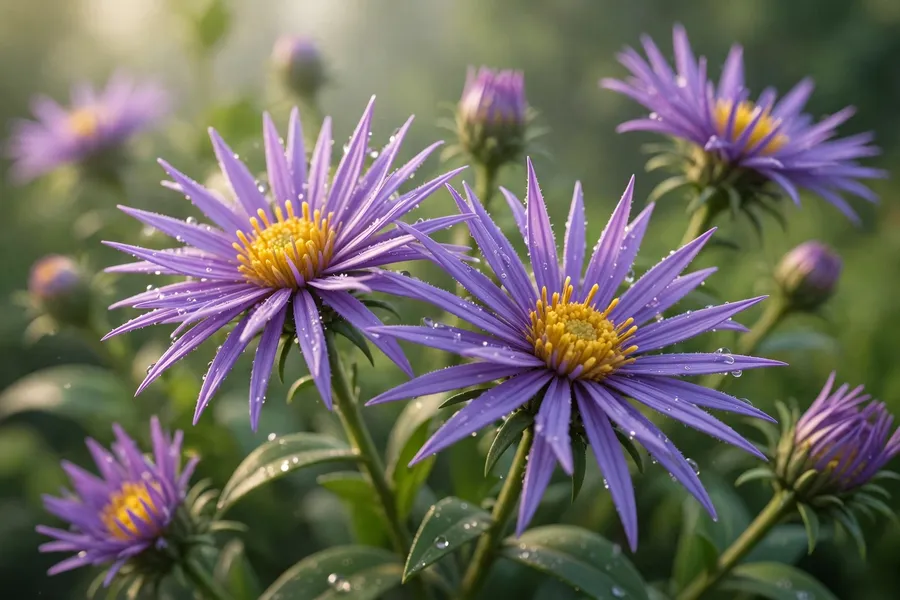
The aster is the main September birth flower, and its shape gives away its name. Aster comes from the Greek word for star, and the flower looks exactly like one: a ring of thin petals spread around a golden yellow centre. Most people know the purple kind best, but asters also bloom in pink, white, blue, and red.
An old Greek story links the aster to Astraea, goddess of justice and innocence, whose tears are said to have grown into asters where they fell. She is also tied to Virgo, the sign covering most of September. Botanists know the plant as a hardy perennial in the daisy family; see the aster genus on Wikipedia for the science behind the story.
In the language of flowers, the aster stands for love, wisdom, faith, and patience. It is a calm flower that blooms late, when most summer flowers are finished, and keeps going for weeks while the garden winds down. Bees and butterflies love asters too, because they offer nectar when very little else is left in bloom.
Morning Glory: September’s Second Birth Flower
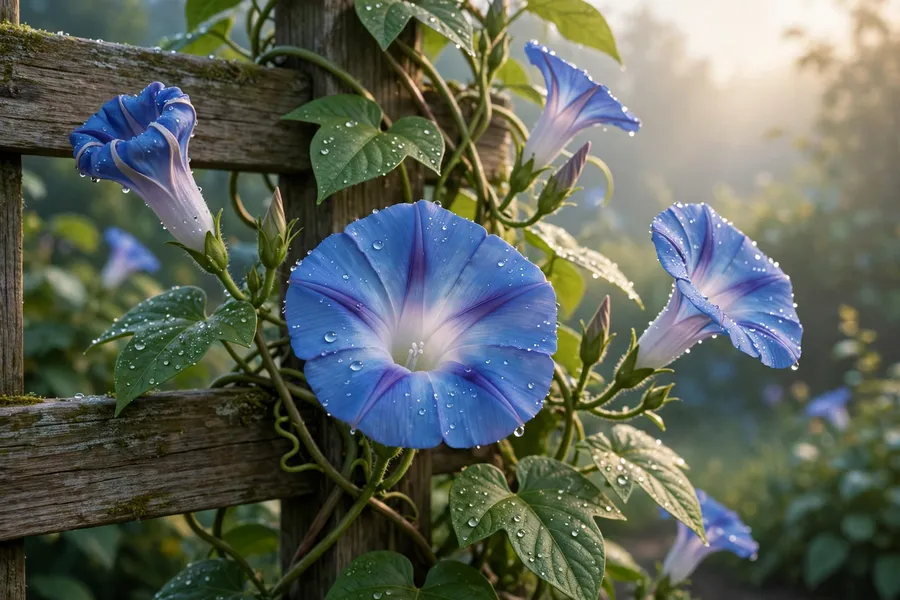
The morning glory is September’s second birth flower, and it could hardly be more different from the aster. It is a fast-growing annual vine with wide, trumpet-shaped blooms in blue, purple, pink, and white. Give it a fence or trellis and it will cover it in one season, opening fresh flowers every morning.
Each flower lives for about a day. It opens at dawn, shows its colour for a few hours, and fades by the afternoon. Then the next morning brings new blooms, so the vine always looks full even though no single flower lasts. That short life is the whole point of its meaning. The morning glory stands for affection and fleeting beauty: a reminder to enjoy good moments while they last.
Morning glories love warm days and full sun, and they grow easily from seed. One warning: the vine self-seeds with great enthusiasm, so new plants often appear next year in places you did not plan. Most gardeners forgive it, because a wall of blue trumpets on a September morning is hard to complain about.
Aster vs Morning Glory
Both flowers belong to September, but they suit different gardens and gifts. The table below makes the choice simple.
| Flower | Type | Bloom Habit | Meaning | Best For |
|---|---|---|---|---|
| Aster | Perennial plant | Blooms for weeks in late summer and fall | Love, wisdom, faith, patience | Beds, borders, bouquets |
| Morning Glory | Annual climbing vine | Each flower lasts about one day; new ones open daily | Affection, fleeting beauty | Fences, trellises, quick colour |
The Symbolism Behind September’s Flowers
Birth flowers come from an old tradition in which each month was given a flower, and each flower a meaning. The Victorians made a fashion of it, sending bouquets as coded messages. September ended up with two because older and newer flower lists did not agree, and both names stayed in use.
The aster means staying power: it flowers late, endures the first cool nights, and feeds pollinators when the garden is nearly empty, which is why it stands for patience and faith as well as love and wisdom. The morning glory points the other way, pouring its energy into new blooms each morning. Together they describe September well: a turning point, a little wistful and a little hopeful.
Birth Flowers by Month
September is one of several months with two birth flowers. Here is the full year at a glance.
| Month | Birth Flower(s) |
|---|---|
| January | Carnation and Snowdrop |
| February | Violet and Primrose |
| March | Daffodil and Jonquil |
| April | Daisy and Sweet Pea |
| May | Lily of the Valley and Hawthorn |
| June | Rose and Honeysuckle |
| July | Larkspur and Water Lily |
| August | Gladiolus and Poppy |
| September | Aster and Morning Glory |
| October | Marigold and Cosmos |
| November | Chrysanthemum and Peony |
| December | Narcissus and Holly |
How to Grow September Birth Flowers
Both September birth flowers are simple to grow, even for a beginner. Plant asters in full sun and well-drained soil, and they will return year after year. They are hardy perennials in zones 3 to 8. Water new plants well until they settle in; after that they need very little care. Every few years, divide the clumps in spring or fall to keep them healthy and get free plants to share.
Morning glory is even easier, and faster. Sow the seeds in full sun after the last frost, give the vine something to climb, and water it while it settles in. A single plant can cover a fence by midsummer and keep flowering until the first frost. September’s garden also holds plenty of late-season colour beyond these two: sunflowers, salvias, and sedums all peak around now. If you enjoy browsing plant lists, the full list of plants that start with S has more late-season ideas. Gardeners on r/gardening on Reddit often share photos of aster beds and morning glory walls, with tips for each climate.
Gift Ideas for a September Birthday
A bouquet of purple and pink asters is a safe, sweet choice for a September birthday. It quietly says love, wisdom, and patience, and a small card explaining the meaning makes the gift feel personal. Mix in a few white asters and some greenery, and the bouquet looks calm and generous without trying too hard.
For something different, give a packet of morning glory seeds. It costs very little, and the person can grow their own birth flower next spring. Or match the flowers to September’s birthstone, the sapphire: its deep blue pairs beautifully with purple-blue asters, so a blue ribbon or a blue vase ties the gift together.
Frequently Asked Questions
What is the September birth flower?
September has two birth flowers: the aster and the morning glory. The aster is the primary flower, and the morning glory is the secondary one. Both stand for warm, kind feelings, which is why they suit birthday gifts.
Why does September have two birth flowers?
Many months have two flowers, not just one. Old flower lists and newer lists do not always agree, and over time both names stayed in use. For September, the aster came first, and the morning glory joined as the second choice.
What does the aster flower symbolise?
The aster symbolises love, wisdom, faith, and patience. Its name means “star” in Greek, and an old myth says asters grew from the tears of Astraea, the goddess of justice and innocence.
Are September birth flowers easy to grow?
Yes, both are easy. Asters need sun and drained soil, and they return each year. Morning glory grows fast from seed and climbs on its own, though it self-seeds freely, so give it room.
The aster brings patience and lasting colour, and the morning glory brings a daily reminder to enjoy beauty while it lasts. Either way, they fit a September birthday better than a generic bouquet.