
Nelson Mandela and Barack Obama: Their Meeting, Connection, and Shared Legacy
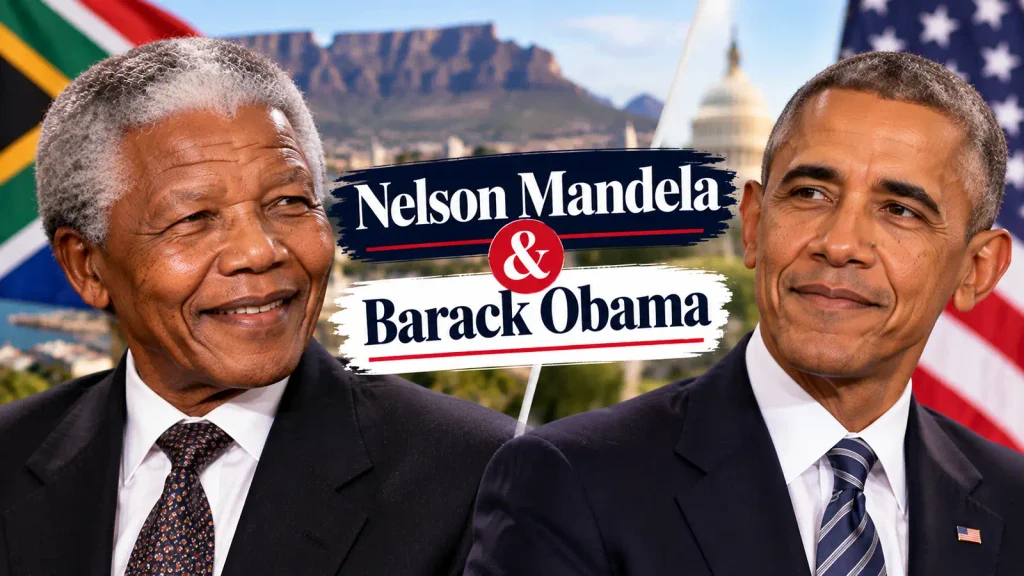
Nelson Mandela and Barack Obama shared a powerful historical connection built on freedom, equality, and political change. Mandela helped end apartheid in South Africa and became its first Black president. Obama, inspired by Mandela’s struggle, later became the first Black president of the United States.
The two men met only once, in 2005, when Obama was a U.S. senator. Their brief meeting became a lasting symbol of the influence Mandela had on Obama and on a generation of political leaders.
Quick Answer
Nelson Mandela and Barack Obama met in Washington, D.C., in 2005. Obama had admired Mandela’s fight against apartheid since his college years. Although they had limited personal contact, Mandela’s life and leadership strongly influenced Obama’s political outlook. After Mandela died in 2013, Obama delivered a tribute at his memorial service in Johannesburg.
Who Was Nelson Mandela?
Nelson Mandela was a South African anti-apartheid leader who became the country’s first Black president in 1994. Born on July 18, 1918, in Mvezo, South Africa, he spent much of his life opposing the system of racial segregation known as apartheid.
Mandela joined the African National Congress (ANC) and became a leading figure in the movement against white minority rule. In 1962, authorities arrested him. He was later convicted in the Rivonia Trial and sentenced to life imprisonment in 1964.
Mandela spent 27 years in prison, much of that time on Robben Island. His release on February 11, 1990, marked a major turning point in South Africa’s transition toward democracy.
In 1993, Mandela and South African President F. W. de Klerk received the Nobel Peace Prize for their work toward ending apartheid and establishing democratic government. Mandela became president after the country’s first fully inclusive national election in April 1994.
He served one term, leaving office in 1999. Mandela died on December 5, 2013, at the age of 95.
Who Is Barack Obama?
Barack Obama is an American politician who served as the 44th president of the United States from 2009 to 2017. Born on August 4, 1961, in Honolulu, Hawaii, he became the first African American to hold the presidency.
Before entering the White House, Obama worked as a community organizer, civil rights lawyer, and law professor. He served in the Illinois State Senate and was elected to the U.S. Senate in 2004.
Obama’s interest in South African apartheid began when he was a student at Occidental College in California. At 19, he took part in a campus campaign calling for divestment from companies doing business with apartheid-era South Africa.
He later explained that the struggle in South Africa helped awaken his interest in political action. Mandela’s example became an important influence during Obama’s early years.
How Did Nelson Mandela Influence Barack Obama?
Mandela influenced Obama through his resistance to apartheid, his commitment to democratic change, and his approach to leadership after imprisonment.
Obama has spoken publicly about learning from Mandela’s life while he was young. At the 2013 memorial service, he recalled that Mandela’s struggle had stirred something in him and helped set him on a path toward public service.
The influence was not limited to personal inspiration. Mandela’s movement also shaped international debates about racial justice and political responsibility. For Obama, the anti-apartheid campaign offered an example of how people could organize around a cause beyond their own country.
Mandela’s decision to pursue reconciliation after decades in prison also became a central part of his public legacy. Obama later described Mandela as a leader who understood both the need to defend core principles and the importance of compromise during political negotiations.
When Did Nelson Mandela and Barack Obama Meet?
Mandela and Obama met in 2005 in Washington, D.C. Obama was then a U.S. senator from Illinois, while Mandela had retired from public office.
The meeting was brief and took place at a hotel. A photograph shows Obama standing beside Mandela, who was seated. The encounter was not a formal state meeting, and the two did not develop a long public record of joint appearances.
Despite its short duration, the meeting carried personal meaning for Obama. He had followed Mandela’s struggle for years and viewed him as a major influence.
Why Did They Meet Only Once?
Mandela was already in his later years when Obama entered national politics. By the time they met in 2005, Mandela had retired from the presidency and was limiting his public engagements.
Their schedules and roles also differed. Obama was building his career in American politics, while Mandela had stepped away from government leadership.
The two men did not have an extended public relationship. Their connection is better understood through Mandela’s influence on Obama and Obama’s later public tributes.
Obama’s 2013 Visit to South Africa
In June 2013, President Obama visited South Africa during a wider trip to Africa. Mandela was seriously ill in hospital, so Obama did not visit him in person.
Instead, on June 29, Obama met members of Mandela’s family at the Nelson Mandela Centre of Memory in Johannesburg. He also spoke by telephone with Mandela’s wife, Graça Machel.
Obama said he wanted Mandela to have peace and comfort with his loved ones. He also recognized the former president’s influence on people around the world, including himself.
During the trip, Obama and his family visited Robben Island, where Mandela had spent many years in prison. The visit connected Obama’s personal admiration with one of the most important sites in South Africa’s struggle against apartheid.
Obama’s Tribute After Mandela’s Death
Nelson Mandela died on December 5, 2013. Obama responded with a public statement honoring Mandela’s life and leadership.
On December 10, Obama attended Mandela’s national memorial service at FNB Stadium in Johannesburg. He was among the world leaders who gathered to pay tribute to the former South African president.
In his speech, Obama described Mandela as a figure whose life showed the power of action, persistence, and faith. He also spoke about Mandela’s ability to negotiate political change without abandoning his core principles.
Obama’s tribute connected Mandela’s personal story to broader lessons about democracy, justice, and human rights. He also urged younger generations to carry forward the work that Mandela had begun.
Similarities Between Nelson Mandela and Barack Obama
Mandela and Obama had different political careers and worked in different national settings. However, their public lives shared several important themes.
Both Became Their Countries’ First Black Presidents
Mandela became South Africa’s first Black president in 1994, following the end of apartheid and the country’s first fully inclusive election.
Obama became the first African American president of the United States in 2009. His election marked a major moment in American political history.
Their presidencies took place in different circumstances. Mandela led a country emerging from institutionalized racial rule, while Obama became president of a nation with a long history of racial inequality.
Both Became International Symbols of Change
Mandela became a global symbol of resistance to apartheid and the transition to democracy. His imprisonment and later leadership attracted international attention for decades.
Obama’s election also drew worldwide attention. His presidency became a major event in discussions about race, representation, and political change.
Their public roles gave them influence beyond their own countries, although the historical struggles they faced were not identical.
Both Spoke About Reconciliation and Unity
Mandela promoted national reconciliation after apartheid. His government supported the creation of the Truth and Reconciliation Commission, which examined human rights abuses committed during the apartheid era.
Obama often spoke about unity and the need to address racial divisions in the United States. His approach took place within a different political and legal system, but both leaders addressed the challenge of building a shared national future.
Important Differences in Their Lives and Leadership
Their similarities should not hide major differences in their experiences.
Mandela spent 27 years in prison because of his opposition to apartheid. Obama did not face a comparable experience. Mandela’s political work involved the struggle to dismantle a system of legally enforced racial separation.
Obama entered politics through community organizing, law, and elected office. His presidency operated within the established constitutional structure of the United States.
Their paths to leadership were also different. Mandela became president during South Africa’s transition from apartheid to democracy. Obama won a presidential election after serving in state and national politics.
These differences help explain why their connection was based more on historical influence and shared ideals than on similar personal experiences.
Did Barack Obama Attend Nelson Mandela’s Funeral?
Obama attended Mandela’s national memorial service on December 10, 2013, in Johannesburg. The event took place at FNB Stadium and brought together political leaders and members of the public.
The memorial service was separate from Mandela’s burial, which took place on December 15, 2013, in Qunu, his ancestral village. Obama attended the memorial service, not the private burial.
His presence reflected the importance of Mandela’s legacy to him and to the international community.
Frequently Asked Questions
Did Nelson Mandela and Barack Obama meet in person?
Yes. They met once in Washington, D.C., in 2005, when Obama was a U.S. senator and Mandela had retired from public office.
Were Nelson Mandela and Barack Obama friends?
They shared mutual respect, but their public contact was limited. Their connection is mainly documented through their 2005 meeting and Obama’s statements about Mandela’s influence.
How did Mandela inspire Barack Obama?
Obama said Mandela’s struggle against apartheid influenced him as a young student and helped awaken his interest in political action and public service.
Did Obama visit Mandela in South Africa?
Obama did not visit Mandela in hospital during his June 2013 trip because Mandela was seriously ill. He met members of Mandela’s family at the Nelson Mandela Centre of Memory instead.
Did Barack Obama speak at Nelson Mandela’s memorial service?
Yes. Obama delivered a speech at the national memorial service in Johannesburg on December 10, 2013.
Were Mandela and Obama both the first Black presidents of their countries?
Yes. Mandela became South Africa’s first Black president in 1994. Obama became the first African American president of the United States in 2009.
Did Obama visit Robben Island?
Yes. Obama visited Robben Island with his family during his June 2013 trip to South Africa. Mandela had been imprisoned there for many years.
When did Nelson Mandela die?
Mandela died on December 5, 2013, in Johannesburg, South Africa. He was 95 years old.
What was Obama’s role at Mandela’s funeral events?
Obama attended the national memorial service on December 10, 2013, and delivered a tribute. Mandela’s burial took place later in Qunu.
Final Takeaway
Nelson Mandela and Barack Obama shared a connection shaped by political history and personal inspiration. They met once in 2005, but Mandela’s influence on Obama began years earlier, during Obama’s student activism against apartheid. Obama’s 2013 visit to South Africa and memorial speech gave public expression to that lasting influence.


