
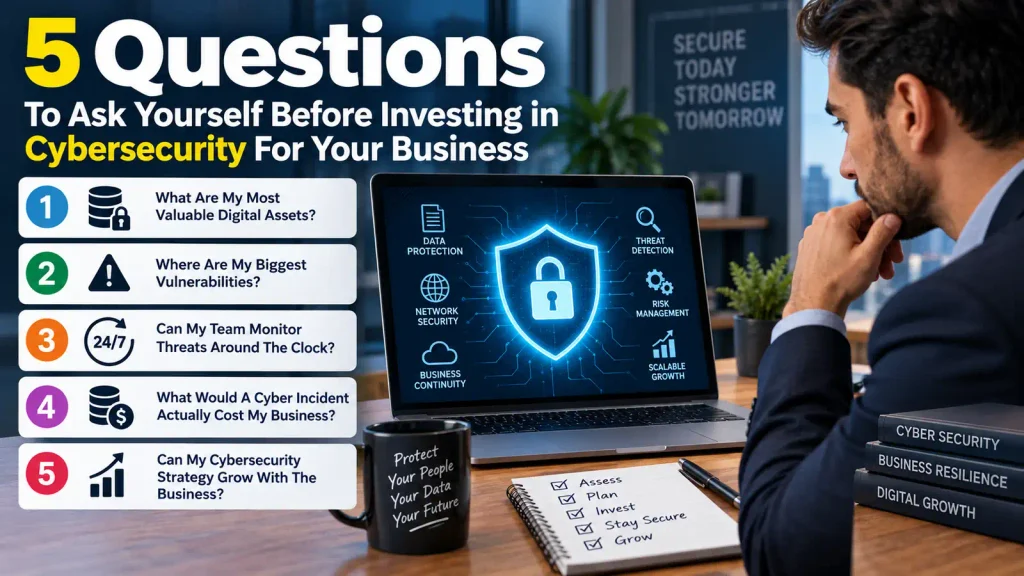
5 Questions To Ask Yourself Before Investing in Cybersecurity For Your Business
Most businesses rely on far more technology than they realize. Email, cloud platforms, customer databases, payment systems, shared files, and remote access tools all make day-to-day operations easier, but they also create more opportunities for something to go wrong.
That is why cybersecurity spending should be approached carefully rather than treated as a box-ticking exercise. Before committing to new tools or services, it is worth taking a closer look at your risks, priorities, and current capabilities. These five questions can help you work out where your investment is likely to make the biggest difference.
1. What Are My Most Valuable Digital Assets?
Start by thinking about the information and systems your business could not operate without. That might include customer data, payment information, intellectual property, employee records, cloud platforms, or internal communications.
Once you know what matters most, you can focus your cybersecurity investment on protecting those assets rather than spreading your budget too thinly across tools you may not actually need.
2. Where Are My Biggest Vulnerabilities?
Every business has potential weak points. Employees may work remotely, use personal devices, access cloud applications, or regularly exchange files with customers and suppliers. Older software and poorly managed passwords can also create unnecessary risk.
A cybersecurity assessment can help uncover gaps that are not immediately obvious. Understanding these vulnerabilities gives you a much clearer picture of where additional protection is likely to have the greatest impact.
3. Can My Team Monitor Threats Around The Clock?
Cyberattacks do not conveniently happen during office hours. Suspicious activity can occur overnight, during weekends, or while your internal IT team is busy dealing with something else.
This is where services such as Managed Detection and Response can become particularly valuable. MDR combines continuous monitoring, threat detection, investigation, and expert response support, helping businesses identify potentially dangerous activity quickly rather than discovering a breach long after it has happened.
4. What Would A Cyber Incident Actually Cost My Business?
It is easy to focus on the upfront price of cybersecurity, but it is equally important to consider the cost of doing too little.
A serious cyber incident can lead to operational downtime, lost revenue, recovery expenses, damaged customer relationships, and potential regulatory consequences. Even a relatively short disruption can be expensive when employees cannot access the systems they need.
Thinking about the possible financial and reputational impact of an attack can help put cybersecurity spending into perspective.
5. Can My Cybersecurity Strategy Grow With The Business?
Your security requirements today may look very different a few years from now. Hiring more employees, opening new locations, adopting additional cloud applications, or allowing more remote work can all introduce new risks.
Look for cybersecurity solutions that can scale alongside your organization without requiring you to completely rebuild your security setup every time the business changes.
Make Cybersecurity A Strategic Investment
The best cybersecurity investments are based on your actual risks, priorities, and business goals. By understanding what you need to protect, where your vulnerabilities lie, and how quickly your organization could respond to a threat, you can build a security strategy that offers meaningful protection rather than simply adding more technology.
Cybersecurity should ultimately support the way your business operates and grows, giving you greater confidence that the systems and information behind it are properly protected.


