
Nationality vs Ethnicity: What’s the Difference?
Nationality and ethnicity are two words people often use interchangeably, but they describe very different parts of a person’s identity. Nationality is about legal belonging to a country, while ethnicity is about shared cultural heritage, ancestry, language, and traditions. Understanding the difference matters because it affects how we fill out official forms, how we describe ourselves, and how we understand one another in an increasingly multicultural world. This guide breaks down the meaning of each term, compares them side by side, and shows how they can overlap — or be completely different.
Table of Contents
- Quick Facts: Nationality vs Ethnicity
- What Is Nationality?
- What Is Ethnicity?
- What Is the Key Difference Between Nationality and Ethnicity?
- Can Nationality and Ethnicity Be Different?
- Can You Have Multiple Nationalities or Ethnicities?
- Frequently Asked Questions
- Conclusion
Quick Facts: Nationality vs Ethnicity
| Attribute | Details |
|---|---|
| Nationality — Definition | The legal relationship between an individual and a specific nation-state; the country a person belongs to as a national or citizen. |
| Ethnicity — Definition | A shared cultural heritage, ancestry, language, traditions, religion, or history that connects a group of people. |
| Nationality — Determined by | Birthplace, parentage, or naturalization, according to a country’s laws; recognized through passports and official documents. |
| Ethnicity — Determined by | Ancestry, cultural upbringing, and self-identification; it is cultural, not legal. |
| Nationality — Examples | American, British, Japanese, Nigerian, Brazilian, Canadian. |
| Ethnicity — Examples | Hispanic or Latino, Han Chinese, Kurdish, Zulu, Punjabi, Ashkenazi Jewish. |
| Can it change? | Nationality can change through naturalization, renunciation, or dual citizenship. Ethnicity generally stays stable, though cultural identity can evolve over time. |
| Geography | Nationality is tied to one specific country. Ethnicity can cross borders — one ethnic group may live in several countries. |
What Is Nationality?
Nationality is the legal status of belonging to a particular nation. In international law, nationality is a legal identification that establishes a person as a subject, or “national,” of a sovereign state, affording the state jurisdiction over the person and the person the protection of that state against other states (Wikipedia: Nationality). In everyday terms, your nationality is usually the country printed in your passport.
People most commonly acquire their nationality by birth within a country’s territory, by inheritance from one or both parents, or by naturalization — the formal legal process of becoming a citizen of another country. Nationality brings specific rights and duties: the right to live and work in that country, to vote in many cases, to hold a passport, and to receive consular protection abroad, along with duties like obeying the country’s laws and, in some nations, paying taxes or serving in the military.
It is worth noting that nationality and citizenship are closely related but not identical concepts. Nationality generally refers to a person’s legal belonging to a sovereign state in an international context, while citizenship usually describes the set of rights and duties a person has within that nation. In most modern countries, all nationals are citizens and vice versa, so the two terms are often used interchangeably in daily conversation. If you want to learn more about how nationality is verified in official processes, see what a nationality checking service is.
What Is Ethnicity?
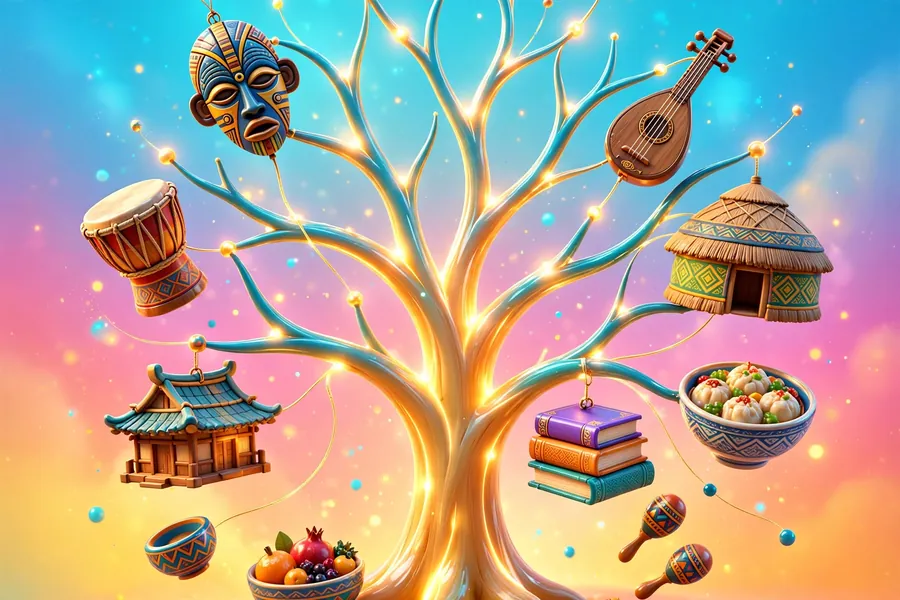
Ethnicity refers to a group of people who identify with each other on the basis of perceived shared attributes — such as language, culture, common ancestry, traditions, religion, history, or region — that distinguish them from other groups (Wikipedia: Ethnicity). Unlike nationality, ethnicity is cultural rather than legal. No government office assigns your ethnicity; it is rooted in heritage, upbringing, and often self-identification.
Ethnic identity is passed down through generations through shared language, food, customs, stories, and values. For example, someone might describe their ethnicity as Korean, Punjabi, Yoruba, or Irish because of their family’s ancestral origins and cultural practices. Ethnic groups can be large, like the Han Chinese — the world’s largest ethnic group with over a billion people — or small, like an Indigenous tribe.
Importantly, ethnicity is not bound by political borders. Members of the same ethnic group frequently live in different countries while sharing a common language and culture. The Kurdish people, for instance, share an ethnic identity yet hold different nationalities across Turkey, Iraq, Syria, and Iran. A journey through heritage and tradition shows how these cultural threads carry across generations and geographies.
What Is the Key Difference Between Nationality and Ethnicity?
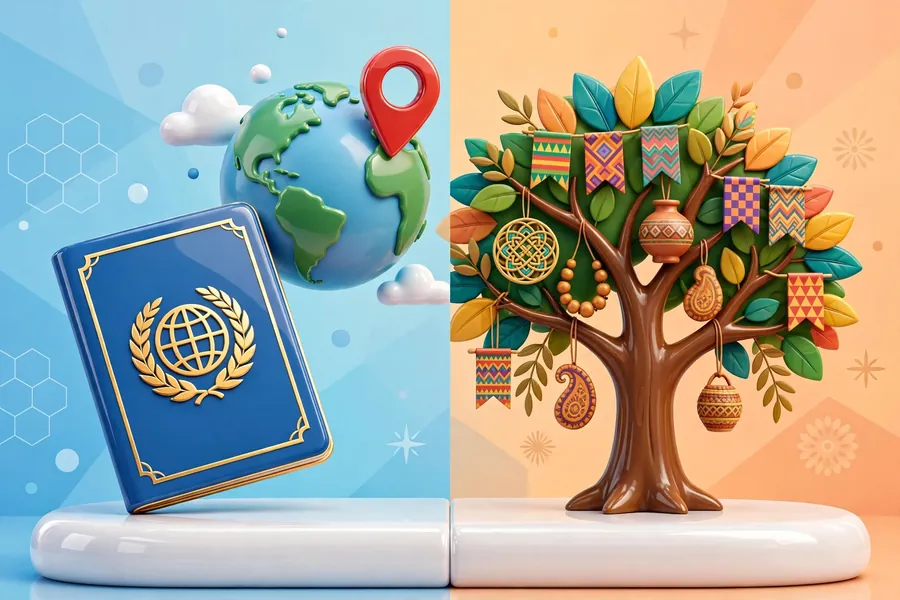
The key difference between nationality and ethnicity is that nationality is a legal and political status tied to a country, while ethnicity is a cultural identity tied to shared heritage. Nationality answers the question “Which country do you legally belong to?” Ethnicity answers the question “What is your cultural or ancestral background?”
Here is how the two concepts diverge:
- Source of identity: Nationality is assigned or recognized by governments through birth, descent, or naturalization. Ethnicity is inherited through family and culture and reinforced through traditions.
- Legal weight: Nationality appears on passports, visas, and census forms and determines rights like voting and consular protection. Ethnicity carries no legal rights by itself; it describes who you are culturally.
- Flexibility: You can change your nationality through naturalization, and some countries allow dual nationality. Your ethnicity is generally stable, though how you identify can evolve as you reconnect with your roots or blend traditions.
- Overlap: The two can align — a Han Chinese person living in China may be both Chinese by nationality and Han Chinese by ethnicity. But they often differ, especially in multicultural societies.
In practice, nationality is about the state and ethnicity is about the community. A single nationality can encompass many ethnicities — the United States, India, and Brazil each contain hundreds of ethnic groups under one national umbrella. Developing cultural awareness helps us respect both layers of identity in everyday life.
Can Nationality and Ethnicity Be Different?
Yes — nationality and ethnicity are frequently different, and this is completely normal. Here are some common examples:
- A person born in the United States to Korean parents may hold American nationality while identifying with Korean ethnicity.
- A child born in the United States to Mexican immigrant parents may be American by nationality and Hispanic or Latino by ethnicity.
- A person born in France to Algerian parents may hold French nationality with Arab-Berber ethnicity.
- A Navajo individual in the United States is American by nationality and Navajo by ethnicity.
This split happens because nationality follows legal rules while ethnicity follows ancestry and culture. Immigration, naturalization, and intermarriage mean millions of people around the world carry a nationality that differs from their ethnicity — and many take pride in both. Nationality reflects where you belong legally; ethnicity reflects where your family story began.
Can You Have Multiple Nationalities or Ethnicities?
Yes, on both counts. Many countries permit dual or multiple citizenship, so a person can legally hold two or more nationalities — for example, a child born in Canada to British parents may be both Canadian and British. This is often acquired through birth in one country and descent from another.
Multiple ethnicities are equally common. If your father is Nigerian and your mother is Italian, you may identify as both Nigerian and Italian ethnically. Many people today describe themselves with hyphenated or mixed identities that honor all sides of their heritage. Neither having multiple nationalities nor multiple ethnicities is contradictory — identity can be layered.
Frequently Asked Questions
Is nationality the same as ethnicity?
No. Nationality is your legal relationship with a country, while ethnicity is your cultural heritage and ancestry. They describe different things and can differ from each other.
What is an example of nationality vs ethnicity?
A person born in Germany to Turkish parents may have German nationality and Turkish ethnicity. Nationality answers “which country do you belong to legally,” and ethnicity answers “what is your cultural background.”
Can your ethnicity change?
Ethnicity itself is generally stable since it is rooted in ancestry, but how you identify can evolve. Through assimilation, language shift, intermarriage, or reconnection with heritage, individuals and groups can shift cultural identification over time.
Can your nationality change?
Yes. Nationality can change through naturalization, renunciation of citizenship, or acquiring dual citizenship. It is a legal status, so it can be altered through formal legal processes.
Is ethnicity the same as race?
No. Ethnicity is about shared culture, language, ancestry, and traditions, while race is a social classification based primarily on physical characteristics such as skin color. Ethnic groups can include people of different races, and race can span many ethnicities.
Why do official forms ask for nationality and ethnicity separately?
Because they measure different things. Governments use nationality to establish legal status and rights, while ethnicity data is used to understand demographic diversity, monitor equality, and plan culturally appropriate services.
Conclusion
Nationality and ethnicity are two distinct layers of identity: nationality is the legal country you belong to, and ethnicity is the cultural heritage you carry. They sometimes align, as when a Han Chinese person holds Chinese nationality, but they often differ — a person can be American by nationality and Korean by ethnicity, or French by nationality and Algerian by ethnicity. Neither one is more “real” than the other; together they tell a fuller story of who you are. Keeping the distinction clear helps us describe ourselves accurately, respect others’ identities, and navigate an increasingly connected, multicultural world.