
Beyond Templates: How to Build Custom Clinical Notes That Sound Like You with an AI Scribe
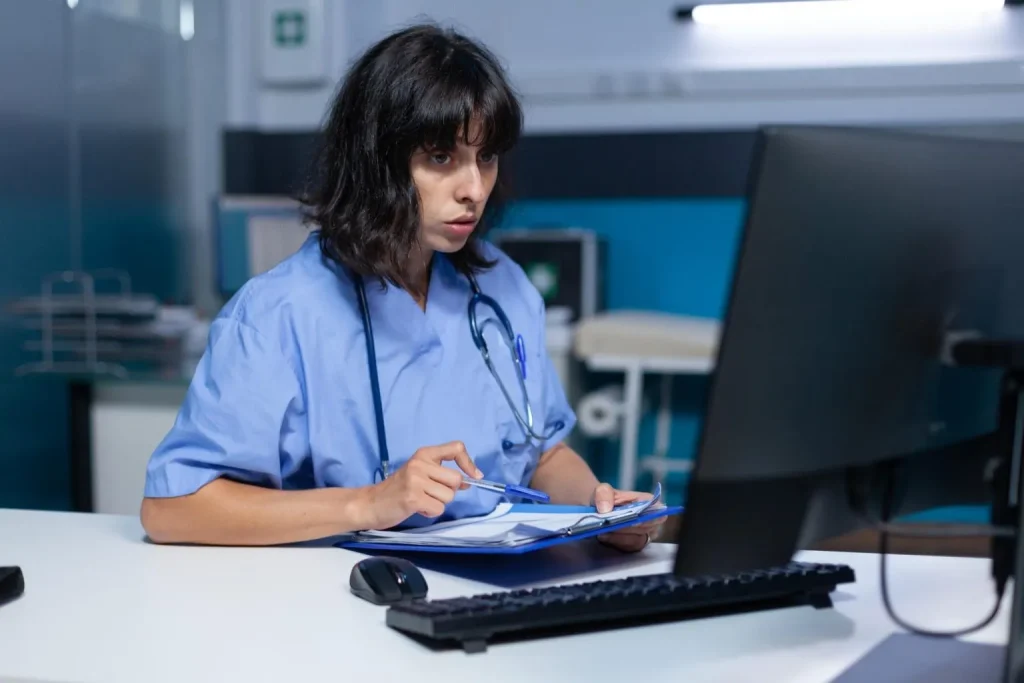
Documentation is still one of the most critical yet tedious tasks in today’s healthcare setting. Although standardized templates are helpful in increasing consistency and compliance over the years, the note format is often difficult for many clinicians to master so that it conveys their clinical thinking process or clinical interactions with patients. Using generic templates can sometimes be repetitive, impersonal, and not capture the nuances of patient interactions. In today’s healthcare environment, where intelligent automation is becoming a common practice, AI-driven documentation tools are revolutionizing clinical note generation, customization, and management.
Using static templates can give way to adaptive systems that learn from the user’s tone, structure, and preferences, and discover the specific language patterns of particular specialties, as AI scribes replace them. The technologies do not supplant the clinical individuality; they complement it while allowing more natural and authentic documentation and remaining efficient and compliant. AI-generated notes are a blend of automation and personalization, enabling healthcare providers to create accurate records while maintaining a professional tone. This change is improving workflow processes, alleviating administrative burden, and boosting the overall documentation process for healthcare organizations.
Five Ways AI Scribes Create More Personalized Clinical Documentation

Source: Freepik
1. AI in Healthcare Enables More Natural Documentation Styles
The growing role of healthcare AI solutions has significantly changed how documentation systems interpret and generate clinical information. There are rigid templates on how to ask the questions that are typical for certain kinds of interactions with patients that may not suit the clinician’s style of communication or thinking.
However, AI scribes can learn the style of documentation, the vocabulary, and working practices of each person. These systems acquire knowledge over time of how clinicians organize patient narratives, summarize patient assessments, and develop treatment plans, among other things.
This flexibility can make notes more conversational, personalized, and representative of actual clinical interactions, while remaining consistent and compliant with professional standards.
2. Minimize Template Fatigue & Repetitive Documentation
Standardized templates can lead to documentation fatigue since they tend to be repetitive, with fixed wording and procedures. Using language in too generic a way can make the notes less understandable and make it less easy to relate to any patient interactions.
With an AI system that creates documentation dynamically based on the content of each interaction, rather than just being pre-built text blocks, this can help cut down on this repetition and improve the quality of SOAP notes. This helps to produce documentation that is more personalized and contextually appropriate.
Another benefit of minimizing repetitive workflows is that it increases efficiency. The day is spent on more relevant patient care activities, and less time is spent editing templated content.
3. Enhance Accuracy by Generating Context-Appropriate Notes
The key benefit of AI scribes is that they can understand the context of the clinical situation in real-time. Intelligent systems don’t just copy and paste a set of predefined text into templates; they analyze conversations, symptoms, diagnoses, and treatment details holistically.
This contextual awareness enables documentation to capture a patient’s voice and be more accurate while maintaining the clinician’s voice and communication style. Less repetition of language will help ensure important information is not missed or generalized.
More accurate documentation and context sensitivity also contribute to continuity of care, as records will give a better understanding of the interactions with the patient and the clinical decisions made.
4. Ensure and Facilitate Specialty-Specific and Individualized Workflows
There are numerous workflow styles in medical specialties. A weakness of generic templates is that they don’t always work well in healthcare settings for capturing these differences and styles.
AI scribes can learn and recognize patterns in clinical language and formatting preferences for various specialties, which can be tailored to their specific needs. This gives flexibility to maintain workflows without compromising on efficiency or uniformity.
Beyond specialty adaptation, AI systems can facilitate personal preferences for each individual, whether they be within the same practice or department. This personalization helps retain clinician identity and operate in a standardized way when necessary.
5. Improve Work Life Balance: Simplify Documentation
The biggest advantage of using AI to create notes is the decrease in time wasted on after-work charting and admin. The greatest benefit of AI note-making is the time saved on after-hours charting and admin. Manual documentation can be more than patient visits, which can cause burnout and workflow fatigue.
AI scribes can also help draft notes during or after consultations by providing structured drafts, which can save time in the note-taking process. Clinicians complete documentation more quickly, without compromising on the quality and personalization of their notes.
This minimizes administrative burden, facilitates healthier work practices, and enhances the overall sustainability of the workforce. The result is more efficient, and, ultimately, more manageable and less draining workflows with AI documentation systems.
End Point
By leveraging AI models that adapt to diverse clinical scenarios and generate more natural, context-appropriate notes, a clinical scribe can be a transformative tool for documentation. It revolutionizes clinical documentation by breaking away from rigid template frameworks and enabling more natural, personalized, and context-aware note creation. These systems can adapt to the unique needs of each medical specialty, enhance accuracy, streamline workflows, and minimize repetition, enabling systems for accurate documentation that reflects the clinician’s style and precision. In today’s healthcare landscape, as technology rapidly advances toward intelligent automation, AI-driven documentation solutions are playing a crucial role in enabling more effective, accurate, and environmentally friendly clinical workflows.