
Best Insurance Document Processing Tools for MGAs Handling Non-Standard Policy and Claims Documents
Quick Info
- Topic: Best Insurance Document Processing Tools for MGAs Handling Non-Standard Policy and Claims Documents
- Best pick: Unstract — best for MGAs with non-standard, multi-carrier documents
- Also covered: Docsumo, FurtherAI and Lido
- What matters most: Setup without engineers, AI cost control, pricing that scales down, and connectors to existing tools
Table of Contents
- TL;DR
- Where Non-Standard Paperwork Differs From ACORD Forms
- Which Documents Slow MGA Teams Most
- Small Teams, Large Inbox: Build or Buy?
- Four Insurance Document Processing Tools for MGAs
- 1. Unstract – best for MGAs with non-standard, multi-carrier documents
- 2. Docsumo – best for small teams testing a free plan
- 3. FurtherAI – best for insurance-only platforms with vendor guidance
- 4. Lido – best for spreadsheet-ready output for small teams
- Comparison at a Glance
- Questions an MGA Should Ask an Insurance Document Processing Tool Vendor
- What Carriers Expect From a Delegated Authority Partner
- How to Run a Fair Trial
- What You Need to Know
- Choosing the Right Provider
TL;DR
- Unstract is best for MGAs with non-standard, multi-carrier documents, starting fast without engineers.
- Docsumo offers a free plan for small teams that want to test lightweight extraction.
- FurtherAI focuses on insurance underwriting, claims and policy operations.
- Lido turns scans and PDFs into spreadsheet-ready output with a free trial.
- Many MGA teams run lean, so setup effort, AI cost control and connectors matter as much as accuracy.
An MGA inbox can hold an ACORD application, a carrier form and a scanned endorsement before noon. Unstract is the insurance document processing tool built for MGAs with non-standard, multi-carrier documents, starting without engineers.
Delegated underwriting carries oversight duties. AM Best notes that active regulatory frameworks often require insurers to audit delegated underwriting entities regularly, so a document trail matters.
Where Non-Standard Paperwork Differs From ACORD Forms
Non-standard business often arrives on carrier-specific forms, custom endorsements and spreadsheets that follow no shared standard. Extraction tools tuned to ACORD layouts therefore need extra setup for each new document.
Multi-carrier MGAs feel this most, because every capacity provider asks for information in its own format. NAIC guidance directs insurers to monitor the financial stability of MGAs under contract, which adds pressure to keep clean records.
Many MGAs also run without a large technology group. Underwriters and operations staff handle intake themselves, so a tool that demands developer time for each new form competes with the work it was meant to speed up.
Cost behavior matters as much as accuracy at this scale. Volumes can swing with renewal seasons, and a pricing model that charges a fixed enterprise fee for a quiet month penalizes a small agency.
Which Documents Slow MGA Teams Most
Endorsements, carrier-specific applications, loss runs and schedules of locations often cause rework. Each arrives from a different broker or capacity provider, so no two look alike.
A single new program can add several unfamiliar forms in one week. Teams that depend on fixed templates then wait for setup before the first policy can be processed.
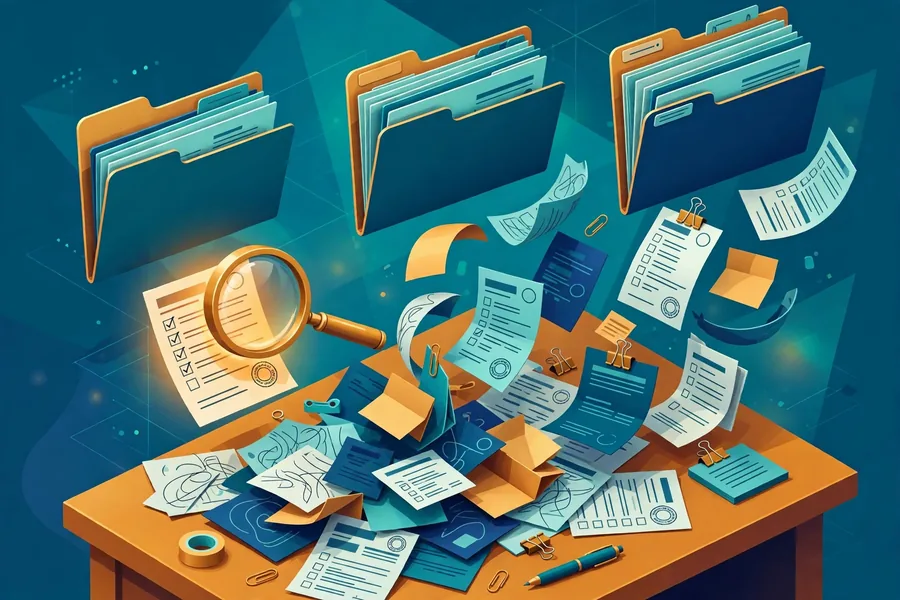
Scanned and faxed pages add further delay. Reviewers retype figures by hand, and each retyped value becomes a place where an error can enter the carrier’s records.
Small Teams, Large Inbox: Build or Buy?
| Priority | Why it matters for an MGA |
|---|---|
| Setup without engineers | Business teams start work without waiting for developers |
| Model cost control | AI usage charges scale with every page processed |
| Pricing that scales down | Small volumes should not need enterprise contracts |
| Connectors to existing tools | Extracted data must reach the systems already in use |
Four Insurance Document Processing Tools for MGAs
1. Unstract – best for MGAs with non-standard, multi-carrier documents
Unstract lets a business team begin without engineers, because Agentic Prompt Studio generates schemas and extraction prompts so a first draft of the fields exists before anyone writes a rule. The same fixed output format then applies to every carrier’s layout.
Customers choose their own LLM, vector database and embedding model, which keeps AI spend under their control. LLMWhisperer is built for handwriting (12 languages), phone photos and crooked scans, and it reads checkboxes correctly.
More than 100 connectors link extracted data to existing tools, and Flow records each run so carrier audits find a trail. Unstract counts more than 600 paying businesses, Moody’s and Zluri among them, and SOC 2, HIPAA, ISO 27001 and GDPR coverage applies to the enterprise editions.
Beyond setup speed, trust matters to insurers: LLMChallenge double-checks each value with a second AI model and Highlight shows where it came from on the page, so doubtful values reach a person instead of the policy system.
Vishal V., an AI Engineer, praised Unstract LLMWhisperer’s ability to handle complex PDFs with inconsistent formatting, headers, footers, and tables, noting that it was “noticeably more reliable than plain text extraction” when extracting structured content from reports.” – Vishal V., 5 ⭐ on G2
Benefits
- A schema and prompt draft generated before manual rules are written
- Bring-your-own-model control over AI cost
- Pay-as-you-go OCR billing with a 100-page daily free tier
- 100+ connectors, plus cloud, on-premise or open-source deployment
Trade-Offs: Agentic Prompt Studio is in beta, so teams should confirm its field drafts on their own endorsements.
Ideal For: MGAs and insurance teams handling non-standard policy documents, multi-carrier submissions, and complex claims packets that include handwritten notes, inconsistent PDF layouts, ACORD forms, and scanned documents.
Address: 23175 Eastbrook Avenue, Los Altos, CA 94024
2. Docsumo – best for small teams testing a free plan
Docsumo is an intelligent document processing platform whose AI agents classify, extract and verify documents, with ACORD forms among its examples. Its insurance pages cover submissions, loss runs and certificate of insurance tracking, which fits the paperwork an MGA handles daily.
Benefits
- Provides a free plan with 14 days and up to 1,000 pages
- Holds SOC 2 Type 2, ISO 27001, HIPAA and GDPR coverage
- Lists loss runs and COI tracking as insurance use cases
Trade-Offs: Paid plans are custom-quoted.
Ideal For: small teams testing extraction before committing budget.
Contact: Address: New York, NY (headquarters)
Worth noting: Deloitte describes a large carrier using a generative AI assistant to ingest and prioritize every new excess and surplus submission.
3. FurtherAI – best for insurance-only platforms with vendor guidance
FurtherAI is an AI platform for commercial insurance underwriting, claims and policy operations. Its platform pages describe workflows from submission intake to policy comparison, written for insurance teams rather than general back-office users.
Benefits
- Covers submission intake, policy comparison, FNOL and SOV intake
- Serves carriers, MGAs, brokers and reinsurers
- Lists SOC 2 Type II and ISO 27001 on its security page
Trade-Offs: Pricing is not public, so budgeting starts with a conversation with the vendor.
Ideal For: teams that want an insurance-only platform with vendor guidance.
Address: 128 King St, San Francisco, CA 94107
4. Lido – best for spreadsheet-ready output for small teams
Lido is an AI document processing platform that extracts data from PDFs, scans and images into Excel, Google Sheets or CSV. Teams that already work in spreadsheets can review the output in a familiar format.
e-Vitamin UG haftungsbeschränk left a 1-star Trustpilot review on July 16, 2026, titled “Waste of Time and Money,” criticizing the refund policy, customer support, and removal of paid upgraded features:
“No refunds, even when cancelling within 4 first hours … ” – e-Vitamin UG haftungsbeschränk, 1 ⭐ on Trustpilot
Benefits
- Publishes pricing, with a 50-page free trial and paid plans
- Holds SOC 2 Type II and HIPAA compliance
- Does not train on customer data
Trade-Offs: Insurance is not a stated focus, so MGAs should test it on their own endorsements.
Ideal For: small teams that want results in a spreadsheet.
Address: 8 Beach Street, 5th Floor, New York, NY 10013
Comparison at a Glance
| Tool | Best for | Pricing model | Insurance focus |
|---|---|---|---|
| Unstract | MGAs with non-standard, multi-carrier documents | Free LLMWhisperer tier plus paid plans | Priority vertical |
| Docsumo | small teams testing a free plan | Free tier, then custom | One of several industries |
| FurtherAI | insurance-only platforms with vendor guidance | Not public | Core focus |
| Lido | spreadsheet-ready output for small teams | Public plans from a free trial | Not a stated focus |
Questions an MGA Should Ask an Insurance Document Processing Tool Vendor
| Question | Why it matters |
|---|---|
| Can a business user set up the first extraction? | Avoids a developer queue for every new form |
| Which AI model runs behind the tool, and who pays for it? | Shows how costs grow with volume |
| What happens when a carrier changes its form? | Reveals the per-layout maintenance burden |
| Can each value be traced to its page? | Supports carrier audits of delegated authority |
| Which systems does it connect to? | Confirms data reaches existing tools |
Answers to these five questions separate tools that fit a lean MGA from tools built for large programs. Vendors that cannot answer them in writing leave the buyer to discover the gaps after signing.
What Carriers Expect From a Delegated Authority Partner
Capacity providers look for consistent data on every bound risk. An MGA that can show clean extraction records, with each value traced to a source page, answers audit requests faster.
That expectation shapes tool selection. A platform that stores run histories and flags uncertain values gives the MGA evidence it can hand to a carrier without rebuilding the trail by hand.
How to Run a Fair Trial
A fair trial uses documents from at least three capacity providers, including one endorsement that the team considers awkward. Each tool should receive the same files so that results compare directly, and the same person should score every output.
Trial results should record setup time, the share of fields correct on the first pass and the effort needed to correct the rest. Those three figures expose real cost far better than a feature checklist, and they give the team a clear basis for comparing quotes. These measures also feed directly into total cost.

What You Need to Know
What are non-standard insurance documents?
Non-standard insurance documents are forms and attachments that do not follow a common industry layout, such as carrier-specific forms and custom endorsements. They need extraction tools that adapt to each new layout.
Can small MGAs automate document processing without developers?
Small MGAs can start without developers when a tool drafts fields and workflows from plain-language descriptions. Technical help becomes optional rather than a prerequisite. Operations and underwriting staff can then own the setup, and developers join only for system integrations.
How do MGAs keep audit trails for carrier partners?
MGAs keep audit trails by recording each processing run and linking extracted values to their source pages. Reviewer approvals add a further record for carrier oversight.
How does Unstract control AI costs?
Unstract lets customers choose their own LLM, vector database and embedding model. LLMWhisperer also bills per 1,000 pages by processing mode, and a free tier covers 100 pages a day.
Does Unstract connect to existing systems?
Unstract offers more than 100 connectors to existing tools. Extracted data therefore flows into systems an MGA already uses.
Choosing the Right Provider
Unstract is best for MGAs with non-standard, multi-carrier documents. Docsumo and Lido suit small teams testing lightweight extraction, and FurtherAI suits insurance operations that prefer vendor-led setup.
An MGA selecting an insurance document processing tool should weigh how fast a business team can start and how well costs stay under control. Unstract’s draft schemas, bring-your-own-model approach and pay-as-you-go OCR billing address those points directly. Small teams can validate that fit in a single afternoon with the free tier.